
Movies

TV Shows
Music
Audiobooks

Indie Lens Pop-Up, presented by ITVS, INDEPENDENT LENS in partnership with Henrietta Hankin Branch Library and WHYY, will host a screening of “Matter of Mind: My Alzheimer’s,” followed by a discussion led by a panel of special guests. The discussion panel will feature Alzheimer’s Association Delaware Valley Chapter representative, Chris Holt, along with staff members from local memory care centers including Serena Jennings, Memory Care Coordinator at Eagleview Landing, and from the Compass Memory Care at Fieldstone in Chester Springs, Amanda Berry, Memory Care Program Director and Terri Nappi, Activities Director. The final documentary in a three-part series focusing on neurodegenerative diseases, “Matter of Mind: My Alzheimer’s,” explores how family dynamics change when a loved one is diagnosed with Alzheimer’s disease.
Nearly 7 million people in the United States are living with Alzheimer’s disease, and family and friends of those living with dementia provide 18 billion hours of unpaid care each year. “Matter of Mind: My Alzheimer’s” follows three families and the unique challenges of their loved ones’ diagnoses, delving into their lived experiences. Going beyond the statistics, the film explores how this disease impacts identities and roles in relationships, when one partner becomes a caregiver, or how both parent and child are transformed when the traditional role of provider is reversed.
WHAT: Free preview screening of “Matter of Mind: My Alzheimer’s” followed by a community discussion about Alzheimer’s and resources for people impacted by the disease, how becoming a caregiver for a parent or partner transforms relationships, the impact of community support, and more.
WHO: Presenters: Indie Lens Pop-Up, Henrietta Hankin Library, and WHYY, along with a special discussion panel of special guests
WHEN: Tuesday, June 3rd, 5:30-7:30 pm
RSVP: This is a hybrid event. Register now to take part either in-person or virtually via Zoom – https://ccls.libcal.com/event/14115067
“Matter of Mind: My Alzheimer’s” debuts May 5, 2025, at 10 p.m. ET on PBS and the PBS app (check local listings).
For more information, visit Independent Lens.
About Indie Lens Pop-Up
Indie Lens Pop-Up is a community series that brings people together for film screenings and conversations. Featuring documentaries seen on PBS’s INDEPENDENT LENS, Indie Lens Pop-Up draws local residents, leaders, and organizations to discuss what matters most. Learn more at pbs.org/indielenspopup.
About INDEPENDENT LENS INDEPENDENT LENS is an Emmy® Award-winning PBS documentary series. With founding executive producer Lois Vossen, the series has been honored with 10 Academy Award nominations and features documentaries united by the creative freedom, artistic achievement, and unflinching visions of independent filmmakers. Presented by ITVS, INDEPENDENT LENS is funded by the Corporation for Public Broadcasting, Acton Family Giving, John D. and Catherine T. MacArthur Foundation, Ford Foundation, Park Foundation, Wyncote Foundation, and National Endowment for the Arts. Stream anytime on the PBS app. For more, visit pbs.org/independentlens.
The Board of Trustees of the Chester County Library System/Chester County Library are hosting their monthly board meeting as a hybrid offering. If you have always wanted to attend a meeting but haven’t had the time, this is your opportunity. Please click on this link at 9:00 a.m. on Tuesday, May 20 to join the Chester County Library System Board Meeting virtually; or attend in person at the Honey Brook Community Library, 687 Compass Road, Honey Brook, PA 19344. The Chester County Library Board Meeting will immediately follow. Find the Chester County Library Board Packet here.
If you are a person with a disability and wish to attend this meeting and require an auxiliary aid, service, or other accommodation to observe or participate in the proceedings, please call Chester County Library’s Administration Office at 610-344-5600 or email ddadoly@ccls.org to discuss how we may best accommodate your needs.
Happy Global Accessibility Awareness Day! In honor of this, today I will be talking a bit about assistive technology. Assistive technology is a general term for any device that helps make the world more accessible for those with disabilities and the elderly. Even things you might not consider assistive technology might be to someone, such as audiobooks. Here at the Chester County and Henrietta Hankin Branch Libraries, we have a growing collection of assistive devices targeted towards making the libraries more accessible spaces. You can see the full list (current as of this post) below, but first, I will highlight a few that you may not be aware that we have.
Hearing Loop

We have a hearing loop (also called an induction loop or hearing induction loop) installed in our Struble Room at the Chester County Library that allows hearing aids, cochlear implants, and other compatible receivers to connect to our sound system via telecoil (often shortened to t-coil). A hearing loop is essentially just a large wire that gets buried under the carpet or otherwise placed around the borders of a room in a loop that gets wired into a sound system. Then, any sound that runs through the sound system (for example: spoken into the microphone) gets fed into the hearing loop that sends out a signal that any t-coil enabled devices can pick up. You must be within the loop in order for it to work (so for example, you can’t leave the Struble Room to go to the bathroom without it disconnecting as soon as you step out the door), but the sound quality is better than the quality you get with a Bluetooth device and also has none of the lag.
There are a couple options for connecting to our hearing loop at the Chester County Library. First is simply by turning on the t-coil in your device while in the Struble Room. On most hearing aids, for example, there is a little switch that may or may not be labeled that will turn on or off the t-coil. If your device is not t-coil enabled, we have a receiver that you can wear around your neck that will connect to it. You can plug headphones into it or connect to it via Bluetooth (for example, if you have a Bluetooth-only hearing aid). This receiver is available to anyone who asks for it regardless of disability status, so feel free to ask us about it!
Brailler

A traditional Brailler is a braille typewriter (also called a braille embosser) that allows a person to type in braille as you would with a typewriter. The model that we have at the Chester County Library is both a braille typewriter and a braille printer. This means that, not only can you type in braille, but you can also print pages of text from the internet. The process of printing, however, is trickier than you might imagine.
Many people assume braille is one to one – one letter to one braille character – but this is just level one braille. Writing in only level one braille is roughly equivalent to using alphabet signs in sign language to spell out each and every word of a sentence. Higher levels of braille make use of contractions, which are shorthand forms of commonly used words or combinations of letters, such as the single character used to represent the word “and”. However, these shortcuts are often situational. In order to print a page of online text, you have to run the text through transcription software, which is like the braille version of a word processor like Microsoft Word, and then print from there, but this potentially introduces errors if you don’t have a person who reads braille and understands the situation proofreading the transcription. That’s not to say it isn’t useful or even readable; it might turn out similar to a document with a bunch of spelling or grammar errors, but that’s still understandable and might still be incredibly valuable for a reader of braille.
We recommend our Brailler to people working on getting their braille certification, those looking to come in and print something in braille to bring home for a person who reads braille, and, of course, for people who are blind or have low vision who read braille. We have braille paper available for use, or you can bring in your own paper. Our Brailler is in the makerspace at the Chester County Library.
Orcam MyEye
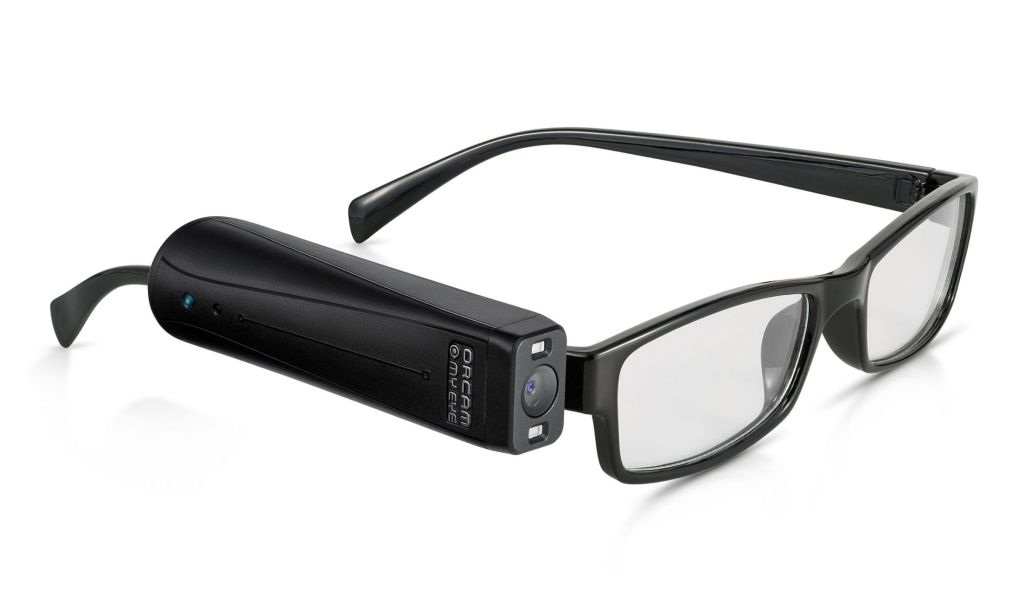
The Chester County Library has an Orcam MyEye, funded by the Lions Club and available from the Reference Desk upon request, which is a device that functions as a guide for people who are blind or who have low vision. The device is about the size of lipstick tube. It’s meant to be situated at eye level, so we have a pair of nonprescription glasses that we lend out with it that it will attach to via magnet. Once turned on and situated appropriately, the device can verbally describe your surroundings, read printed text, clocks, and money, and so on. It does so by recognizing your gestures (for example, if you point at an object, it will tell you what that object is, or if you point at a line of text, it will read it out loud) or by understanding certain tap sequences on its sensor (for example, slide forward, slide back, tap once, etc.).
It has trouble recognizing computer screens, but the better option for this is screen reading software, which we have upstairs in our Jacobs Technology Center (JTC). PC 16 in the JTC has JAWS and ZoomText, which were gifted to us by the Chester County Association for the Blind and Visually Impaired (CCABVI).
Video Magnifiers
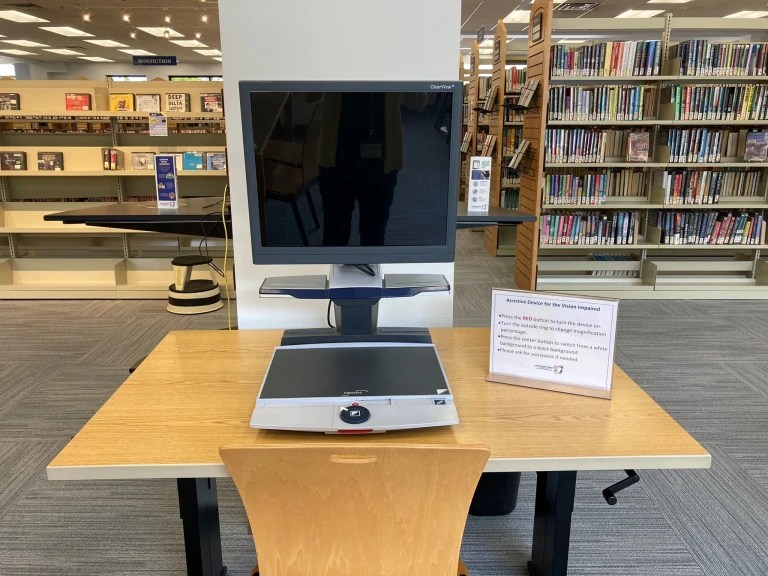
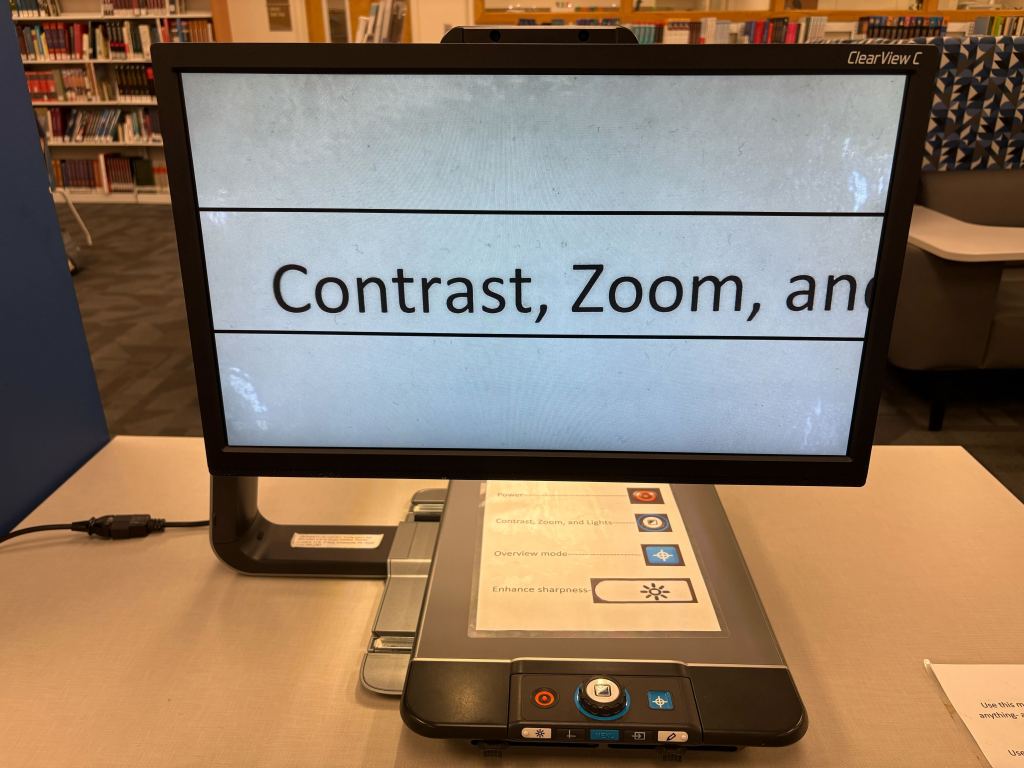
A video magnifier is a device that looks similar to a modified computer screen that can magnify physical objects, especially text, to massive sizes without losing quality, similar to how a digital microscope or telescope works. It can also change contrast and color to various presets for common visual disabilities, or you can specify your own custom settings to accommodate your specific disability or neurodiversity. You can also plug a device into it and use it as a monitor that can zoom in to far greater sizes than your standard computer can and without altering the formatting like you might if you use your browser’s built-in zoom function.
We have two video magnifiers available for use at any time, one at the Chester County Library and the other at the Henrietta Hankin Branch Library.
See the full list here:

Hello! My name’s Rebecca. For those who haven’t been following this series, I am the Information Literacy Librarian here at the Chester County Library. (You might recognize me as the librarian with the purple hair!) Welcome to this series here on our blog where every week (or thereabouts) I’ll be introducing you to one of the library’s databases. A library database, for those who are unsure, is essentially just an online resource that the library pays for so that you can access it for free with your library card!
We have officially come to the end of this databases series! Except for future updates, when we add or remove resources, this will be my last post for this series. So, last, but certainly not least, I will talk about our two big children’s literacy databases: BookFlix and TrueFlix.
Scholastic’s BookFlix pairs classic video storybooks with related nonfiction from trusted Scholastic imprints. This engaging resource for children in grades pre-K through 3 will help early readers develop and practice essential reading skills and introduce them to a world of knowledge and exploration. Each BookFlix unit includes a video of a classic children’s story; a related nonfiction text presented in an eBook format; interactive educational games related to the specific pair; profiles of the author and illustrator of the story on which the video is based; editorially selected, age-appropriate Web links related to the pair topic; and suggested teaching activities created specifically for each fiction/nonfiction pair. A number of pairs are available in Spanish!
TrueFlix leverages the award-winning True Books content to help students hone literacy skills, build knowledge of subject-area content, and cultivate 21st Century Skills through the inquiry process. All of the True Book titles are supported with related content and primary sources featuring videos, audio, images, and text. Each TrueFlix title includes a streaming video that engages the student and introduces the topic; a flipbook version of the True Book with page-turning and read-along features, chapter tabs, and vocabulary terms identified and defined; related content that provides opportunities for further research and reading across a variety of text types; a lesson plan with teaching activities that are tied to the specific content of that TrueFlix topic; a project goal and ideas or questions on how to kick-start research; a 10-question multiple-choice quiz and a Word Match game based on the important words included in each title; and related Web links to help further extend learning, broaden the content area, and provoke further research.
Find BookFlix on our website by going to chescolibraries.org –> Tools and Research –> All CCLS Databases –> B –> BookFlix (POWER Library)
Find TrueFlix on our website by going to chescolibraries.org –> Tools and Research –> All CCLS Databases –> T –> TrueFlix (POWER Library)
This is the final post in this databases series! If you missed the previous installments, you can view them here.

The Chester County Library is excited to host its annual “Read Local!”—now in its second year—a celebration of local creativity featuring authors and illustrators from Chester County and neighboring areas. The event will highlight a wide range of books and genres for both children and adults.
According to April Nickel, Youth Services Director at Chester County Library, the event aims to spotlight local talent—particularly authors and illustrators who have recently self-published or published through independent publishers. These participants submitted applications to share their work with the community, offering a unique opportunity to discover local voices and creative projects. While some of the featured titles may not meet the library’s collection development policy, the event serves as a platform to connect these creators with the public.
The Read Local! showcase will feature more than 30 local authors and illustrators, each with their own table inside the library to display and sell their books. Visitors are invited to engage directly with the creators, explore their works, and learn more about their creative processes.
This open house-style event will take place on Sunday, May 18, from 1 pm to 4 pm at the Chester County Library, 450 Exton Square Parkway, Exton, PA. Admission is free and no registration is required.

To kick off this year’s Summer Reading program, Indie Lens Pop-Up, presented by ITVS, INDEPENDENT LENS in partnership with Henrietta Hankin Branch Library and WHYY will host a screening of “Free for All: The Public Library,” followed by a discussion led by a panel of special guests. The discussion panel will feature Chester County Library and Henrietta Hankin Branch Director, Jenna Persick, and Branch Manager, Carey Bresler, together with Michael Skay, President of the Chester County Library System Board of Trustees. “Free for All: The Public Library” tells the story of the quiet revolutionaries who created a civic institution where everything is free, and the doors are open to all.
The public library is one of America’s most valued yet endangered institutions. Director Dawn Logsdon travels the United States, discovering historic and modern-day figures, especially women, who contributed to the library’s integral position within democracy. “Free for All: The Public Library” chronicles the evolution of the nation’s public libraries, tracing the battles over who can enter, what belongs there, and who makes these decisions, while exploring how public commons are defined and defended.
WHAT: 5:00 pm refreshments and activities; 5:30 pm a FREE preview screening of “Free for All: The Public Library” followed by a community discussion.
WHEN: Thursday, June 5th, 5:00-7:30pm
RSVP: To register, click here.
Doors will open at 5:00pm for participants to enjoy pizza and light refreshments as they take part in activities designed to get everyone thinking about what has made public libraries important in their own lives. Participants can also enter a raffle drawing for family passes to Longwood Gardens. The screener will begin at 5:30pm. After the screening, our guest panelists will host an engaging and interactive discussion about how public libraries shaped the country and continue to be a sanctuary for Americans everywhere, despite the threats to funding the civic institution has faced in recent years.
“Free for All: The Public Library” had its debut on April 29, 2025, on PBS and the PBS app. For more information, visit Independent Lens.
About Indie Lens Pop-Up
Indie Lens Pop-Up is a community series that brings people together for film screenings and conversations. Featuring documentaries seen on PBS’s INDEPENDENT LENS, Indie Lens Pop-Up draws local residents, leaders, and organizations to discuss what matters most. Learn more at pbs.org/indielenspopup.
About INDEPENDENT LENS INDEPENDENT LENS is an Emmy® Award-winning PBS documentary series. With founding executive producer Lois Vossen, the series has been honored with 10 Academy Award nominations and features documentaries united by the creative freedom, artistic achievement, and unflinching visions of independent filmmakers. Presented by ITVS, INDEPENDENT LENS is funded by the Corporation for Public Broadcasting, Acton Family Giving, John D. and Catherine T. MacArthur Foundation, Ford Foundation, Park Foundation, Wyncote Foundation, and National Endowment for the Arts. Stream anytime on the PBS app. For more visit pbs.org/independentlens.

Hello! My name’s Rebecca. For those who haven’t been following this series, I am the Information Literacy Librarian here at the Chester County Library. (You might recognize me as the librarian with the purple hair!) Welcome to this series here on our blog where every week (or thereabouts) I’ll be introducing you to one of the library’s databases. A library database, for those who are unsure, is essentially just an online resource that the library pays for so that you can access it for free with your library card!
We’re nearing the end of this series, but I still have a couple more important topics to cover, the first of which is research and reference databases. We have a number of research and reference databases both through us and through POWER Library targeted towards various age groups and covering a wide range of subjects. These are useful for doing research, completing school papers or projects, homeschooling, or otherwise finding authoritative sources. I will go over each of them briefly here:
Academic Search Main Edition (POWER Library): This database includes full-text and peer-reviewed articles in subjects such as biology, chemistry, engineering, physics, psychology, religion, and theology.
Gale eBooks: We currently have two Gale eBooks collections, one through POWER Library and one through CCL. These collections include reference titles in the arts, biography, business, education, environment, general reference, history, literature, medicine, nation and world, science, and the social sciences. CCL’s collection includes the Business Plans Handbook series.
GreenFILE (POWER Library): GreenFILE offers well-researched information covering all aspects of human impact to the environment. Its collection of scholarly, government, and general-interest titles includes content on global warming, green building, pollution, sustainable agriculture, renewable energy, recycling, and more.
IN CONTEXT: Middle School (POWER Library): This database includes reliable and trusted information on a variety of topics to support middle school student research for government, U.S and world history, geography, literature, sciences, and social issues.
Kids InfoBits (POWER Library): Elementary students in kindergarten through grade five will find age-appropriate content covering a broad range of educational topics such as animals, arts, geography, health, literature, people, social studies, technology, and etc. Content is continuously updated and provides interesting and important facts with connections to current and past events.
Library, Information Science and Technology Abstracts (POWER Library): This database indexes a number of journals, books, research reports, and proceedings in subjects such as librarianship, classification, cataloging, bibliometrics, online information retrieval, information management and more. Coverage in the database extends back as far as the mid-1960s.
MasterFILE Premiere: This database provides subject overviews, full text for magazine articles (including Consumer Reports Magazine and Consumer Reports Buying Guides), an image collection, and AP clips. (Please note that we will no longer have access to this database after June of this year, so use it now while you can!)
ONEFILE: High School Edition (POWER Library): Secondary school students will have access to age-appropriate content from magazines, journals, newspapers, reference books, and engaging multi-media covering a wide range of subjects, from science, history, and literature to political science, sports, and environmental studies.
Science Reference Center: Perform research from hundreds of full text science encyclopedias, reference books, periodicals, and other reliable sources. View high-quality science images from sources such as UPI, Getty, NASA, National Geographic, and the Nature Picture Library.
SIRS Discoverer: This database provides coverage in areas including history, health, language arts, math, science, social studies, and technology. All newspaper, magazine, and reference book content is 100% full text, editorially-selected, and indexed from publishers such as Britannica, World Book, Rosen Publishing Group, Enslow, and ReferencePoint Press.
Teacher Reference Center: Teacher Reference Center provides indexing and abstracts for 280 of the most popular teacher and administrator journals and magazines to assist professional educators.
Find these databases on our website by going to chescolibraries.org –> Tools and Research –> All CCLS Databases
This post is number 21 in this databases series! If you missed the previous installments, you can view them here.
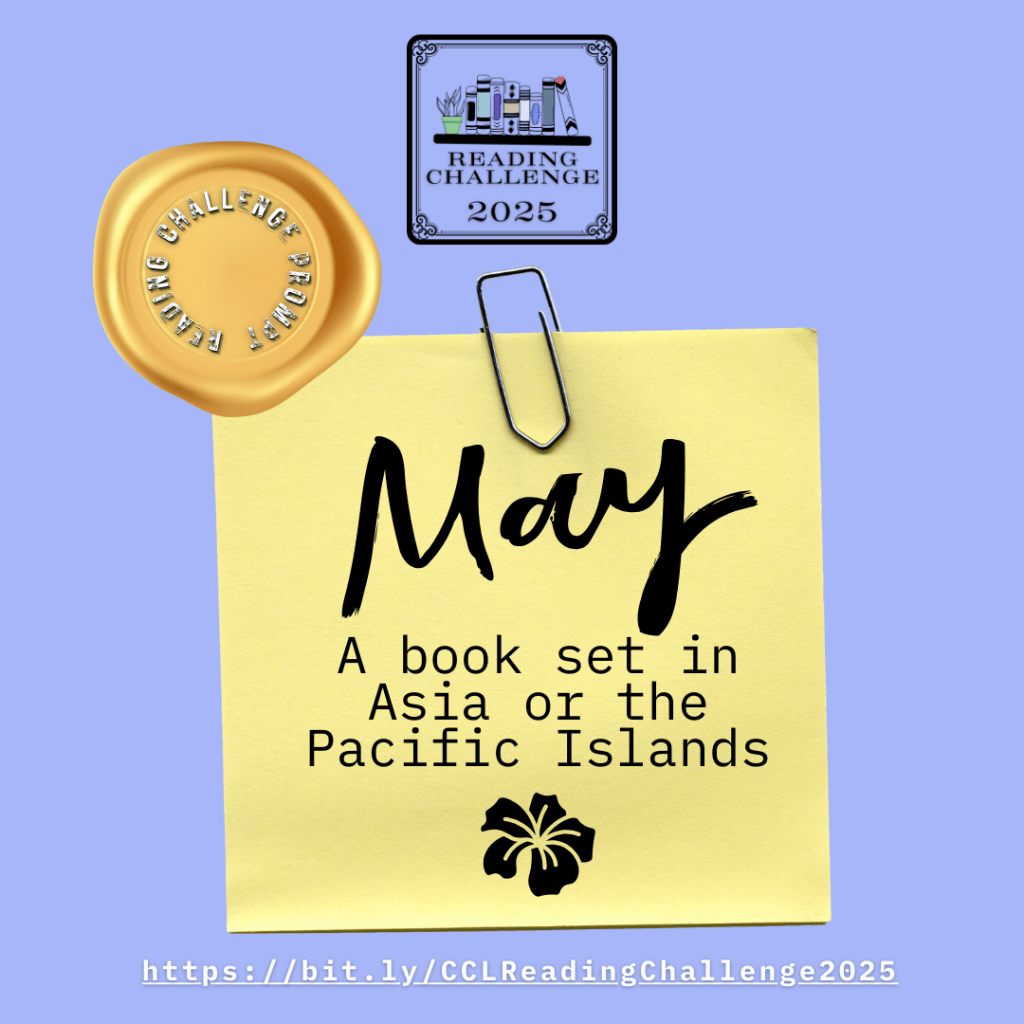
Welcome to the fifth month of the Chester County and Henrietta Hankin Branch Libraries’ 2025 Reading Challenge! The challenge is open to all readers reading at a Young Adult or Adult level in any format.
Each month, there will be a new reading prompt to follow. The reading challenge prompt for May is “A book set in Asia or the Pacific Islands.”
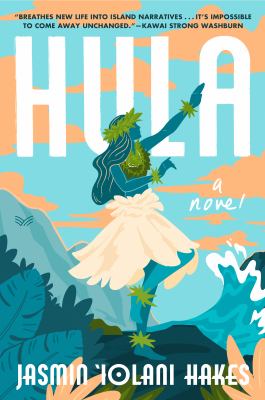
Need inspiration for what to read? Check out a few suggested reads below! See the full list on our catalog here. Make sure to also visit the library to explore our interactive book display.
If you need even more inspiration for books to read or listen to, feel free to request Personalized Reading Suggestions or check out the NoveList Plus database.
No registration is necessary to participate in the challenge. To get started, simply pick up a physical tracking log at the Reference Desk or print one out at home using the link provided in the Resources section of the Reading Challenge page at https://bit.ly/CCLReadingChallenge2025.
Happy reading!




 Stay Connected with Chescolibraries