
One of the most exciting “plot devices” in movies is the agglomeration of a select team that embarks on a hazardous mission whose members generally expect to return in one piece. Until the 1960s this phenomenon was rare. The films in question cross genres. Not included here are heist films (that began in earnest in 1950 with The Asphalt Jungle and Armored Car Robbery), which can be construed as a subgenre of film noir which itself is a subgenre of Crime, Mystery and Suspense. Nor are superhero outings examined. The Avengers, for instance, are always on hazardous missions, their skills well-known in advance.
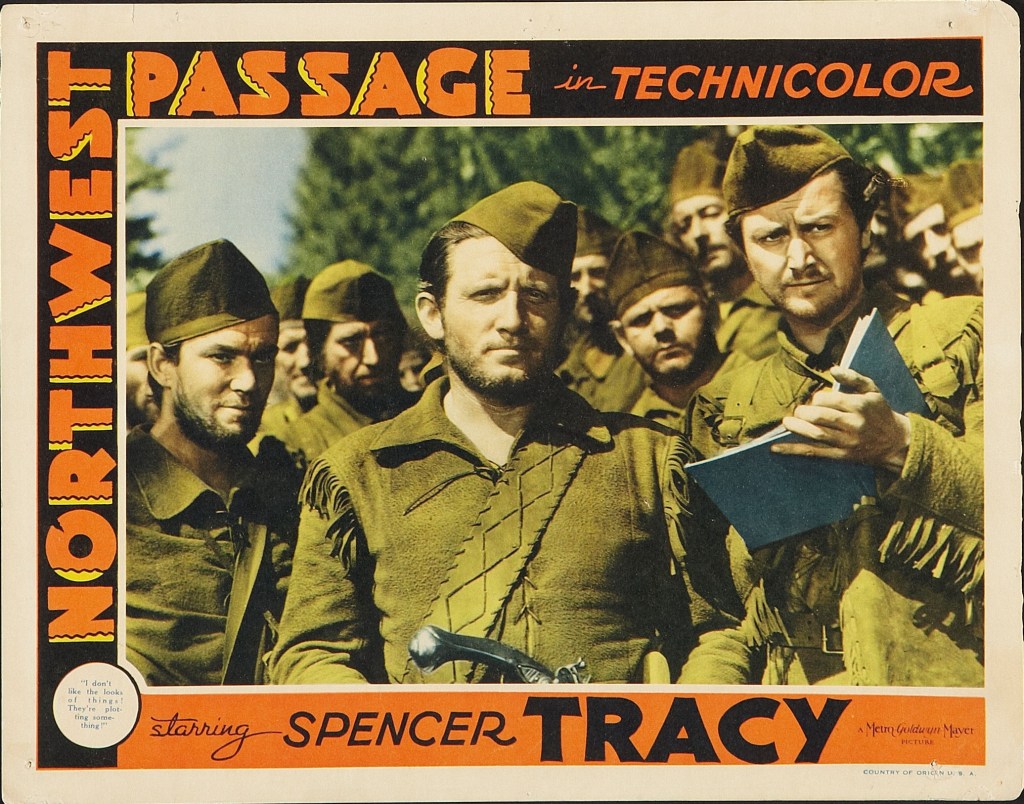
Perhaps the first example of the “single mission” team adventure is Northwest Passage (1940). During the French and Indian War, Major Robert Rogers (Spencer Tracy) leads his wilderness savvy Rangers through the Maine wilderness and into Canada to destroy the St. Francis Indian encampment from which marauders have been despoiling Colonial homesteads. The specialty of Langdon Towne (Robert Young) is map-making. The mission accomplished, the Rangers split up to avoid capture by surviving tribesmen and French regulars. (A “hidden” remake is 1945’s Objective, Burma! One of the best combat movies made during World War II features Errol Flynn as leader of parachutists who land behind Japanese lines, blow up a radar station, and try to escape with minimal casualties. As in Northwest Passage, the soldiers disperse during their return to Allied lines and half of them perish.)
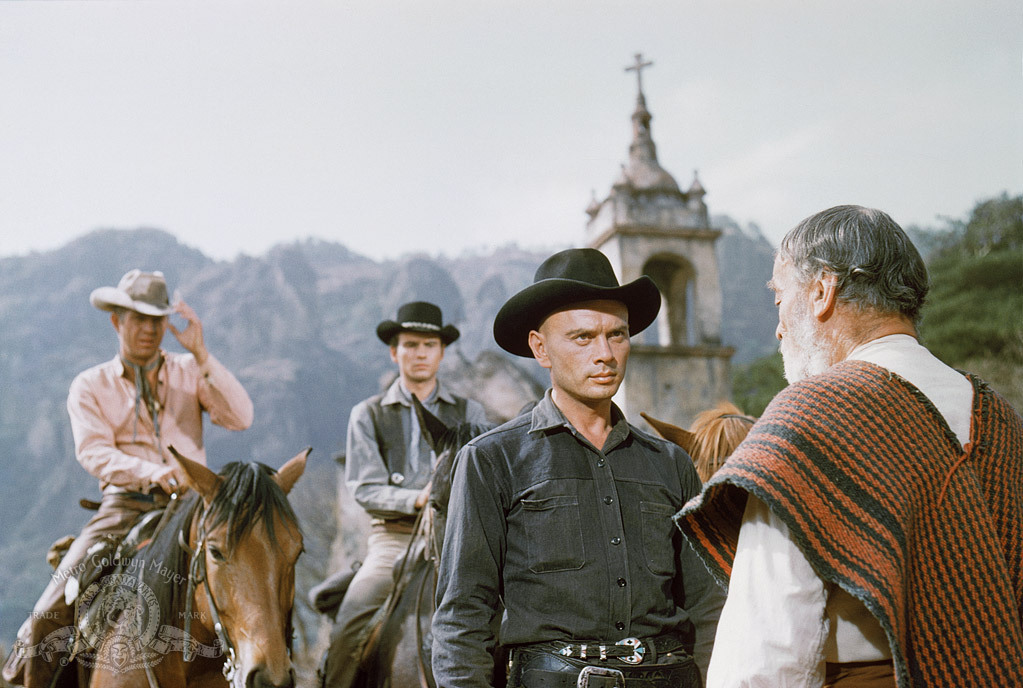
A lengthy gap for this trope ensues but returns with a vengeance in 1960 with The Magnificent Seven, which was inspired by Japanese director Akira Kurosawa’s classic Seven Samurai (1954). Poor Mexican villagers hire American gunslingers to protect them from the imminent arrival of Calvera (Eli Wallach) and his numerous bandidos. Chris (Yul Brynner) convinces six other gunmen down on their luck to join him and stop Calvera’s depredations. Most do not survive. (There are two sequels of lesser worth, Guns of the Magnificent Seven, 1969, and The Magnificent Seven Ride, 1972. A major remake appeared in 2016, and as has become typical, adds high explosives plus a Gatling gun to cause carnage.)

Following on the heels of Magnificent Seven came The Guns of Navarone (1961), a monster hit and Academy Award nominee for Best Picture. (West Side Story was the winner that year.) After Major Franklin (Anthony Quayle) is injured, the small group of British commandos and Greeks are led by Captain Keith Mallory (Gregory Peck), expert mountaineer who helps them scale forbidding cliffs on their way to destroy two gigantic German guns preventing approach by ships tasked with rescuing British forces on the island of Kheros. Taking a cue from Magnificent Seven’s knife-wielding expert played by James Coburn, Stanley Baker is the blade virtuoso. David Niven’s forte is explosives. (Force 10 from Navarone was a 1978 sequel. Peck and Niven teamed for a somewhat similar mission in 1980’s The Sea Wolves, with a German ship targeted for destruction.)
The Secret Invasion (1964) was a low-budget but entertaining harbinger as the plot is eerily similar to both The Dirty Dozen (1967) and Where Eagles Dare (1968). Stewart Granger leads convicts with special skills (forgery, murder, explosives) into Yugoslavia during World War II to rescue from German captivity an Italian general sympathetic to the Allied cause.

Another large and hugely enjoyable western used the team approach in 1966’s aptly titled The Professionals. Lee Marvin leads a quartet into Mexico to rescue Maria (Claudia Cardinale), wife of rancher J. W. Grant (Ralph Bellamy). Maria has been ostensibly kidnapped by Jesus Raza (Jack Palance). Burt Lancaster plays the demolition expert. Robert Ryan is master of equines. Woody Strode is a scout and archer who facilitates explosives ignition. On the strength of his Academy Award-winning dual role in 1965’s Cat Ballou and National Board of Review win for the same year’s Ship of Fools, Marvin was now far from his apprenticeship as the fifties’ and early sixties’ greatest screen villain (Bad Day at Black Rock, The Big Heat, The Wild One, Violent Saturday, Seven Men from Now, The Comancheros, The Man Who Shot Liberty Valance).

Like The Professionals, The Dirty Dozen (1967) are trained and led by Major Reisman (Lee Marvin), training a diverse but highly dangerous group of army convicts whose mission is to parachute into France before D-Day and blow up a chateau full of German officers. This they do but like The Magnificent Seven, only a few survive. (The Devil’s Brigade, 1968, seems unashamedly beholden to The Dirty Dozen but was released not long after the 1967 movie and was based on a 1966 book.)

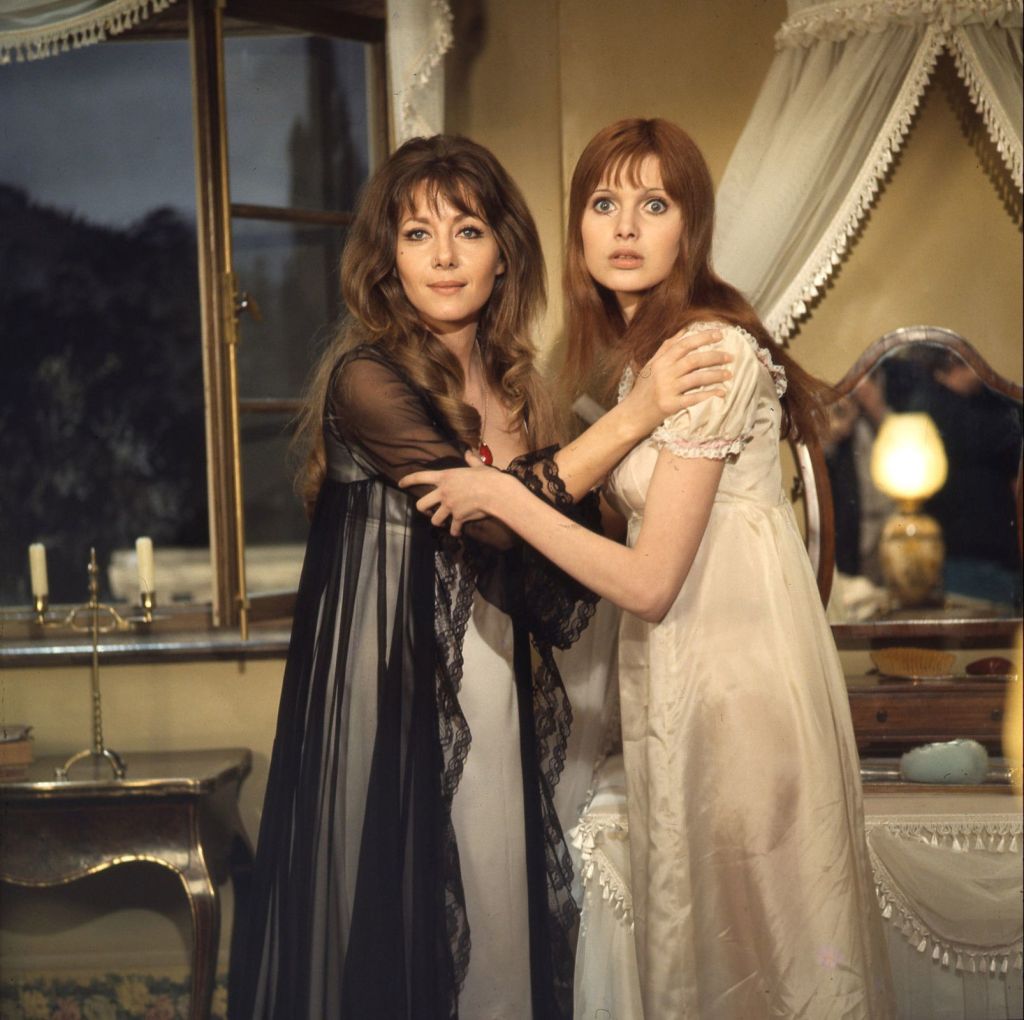
Where Eagles Dare (1968, U.K.). Ubiquitous today on TV, this high-powered WW II saga (like The Guns of Navarone, from writer Alastair MacLean) stars Richard Burton and Clint Eastwood. The latter, after his “spaghetti western” trilogy, plus Hang ‘Em High and Coogan’s Bluff (both 1968)was on the cusp of superstardom. As Lt. Schaffer, a sometimes demolition expert, he and Major Smith (Burton) infiltrate a German castle holding an Allied general with secrets to the forthcoming D-Day invasion. One could argue this is not much of a team, but they are assisted by Mary Ure and Ingrid Pitt, who facilitate ingress and egress from the eyrie and make their escape with the men. (Although she caused the screaming, in 1970 Pitt would claim title as Hammer Films’ signature scream queen in The Vampire Lovers.)
Predator (1987). Major “Dutch” Schaffer (Arnold Schwarzenegger) and an elite extraction team enter the Central American jungle to rescue a cabinet minister held by insurgents. Unknown to them, a space alien hunter lurks in the forest canopy and is soon picking off the humans and taking trophies. At first glance the team members might seem like ordinary mercenaries but as the story progresses we see Blain (Jesse Ventura) operating a monstrous hand-held minigun that can sever small tree trunks and the scout Billy (Sonny Landham) choosing to confront the predator with a machete. Richard Chaves plays a demolition man.
The Lord of the Rings: The Fellowship of the Ring (2001). The wizard Gandalf the Grey visits Hobbiton to inform young Frodo that he has a highly dangerous mission to perform with the fate of Middle Earth hanging in the balance: return the “One Ring” to the volcanic pit of Mount Doom, thus foiling the evil Sauron’s quest for ultimate power. Accompanying Frodo are three friends, a “Ranger,” an axe-wielding dwarf, an expert Elf archer, and the Gondor warrior Boromir. Frodo’s perilous adventure continues in The Two Towers (2002) and The Return of the King (2003).
The League of Extraordinary Gentlemen (2003). Retired adventurer Allan Quatermain (Sean Connery) leads a coterie of disparate entities against the “Fantom,” aka “M” and “Moriarty” (Richard Roxburgh), one-time nemesis of Sherlock Holmes now bent on starting a world war. Quatermain’s crew includes the ageless Dorian Gray, Captain Nemo, Henry Jekyll/Edward Hyde, Mina Harker and Tom Sawyer. The film made a bit of money despite being roundly criticized as an incoherent mishmash.

Inception (2010) Leonardo DiCaprio is a thief enlisted to form a team, invade an industrialist’s subconscious, and convince him to dissolve a company. That’s the short synopsis of this heady science fiction action adventure, a sort of futuristic “magnificent seven.”
Films that some might include in this survey but I did not are The Wild Geese (1978; aging, no longer elite mercenaries), Aliens (1986; overconfident squad of Marines), Saving Private Ryan (1998; regular soldiers undertaking rescue mission). An outlier that could be construed as a Single Mission Player is the French classic of 1953, The Wages of Fear. Four down-and-out men of disparate backgrounds marooned in South America drive—carefully—two trucks loaded with nitroglycerine to a distant oil well that is aflame and must be capped. (Director William Friedkin’s 1977 movie Sorcerer is an unacknowledged remake.)
By Kim







 We have new collections of


 AudioFile Magazine’s Golden Voices list is like a Hall of Fame of Audiobook narrators. One of this year’s
 Regency era. Featuring captivating characters and a meticulously researched and carefully-built world, this Hugo-winning debut novel will have you turning page after page, unable to put it down. At the height of England’s war against Napoleonic France, when magic seems to be merely a topic of study and theory but never of practice, to practicing magicians of very different temperaments—Jonathan Strange and Mr. Norrell—emerge and, through their initial partnership and eventual rivalry, change the course of history forever.
 you wanted to!). Lords and Ladies is set in the small, sleepy Kingdom of Lancre, a kingdom run by a king who was once a court jester and protected by three witches: Granny Weatherwax, Nanny Ogg, and Magrat Garlick. When it seems that the elves are returning to Lancre, the kingdom’s young people are confused as to what all the fuss is about—after all, elves are supposed to be nice. But the witches know better. Elves aren’t nice, elves are bad, and it’s up to the witches to stop them before they ruin the King’s wedding and possibly much more. Loaded with Pratchett’s trademark whimsical wit, colorful characters, and a few winks and nods to Shakespeare’s
  Looking for a book that will transport you out of this reality? Then give Gail Carriger’s Finishing School series a try! Set in an alternate Victorian England, this humorous steampunk series follows Sophronia through her many adventures at Mademoiselle Geraldine’s Finishing Academy for Young Ladies of Quality. Moira Quirk does a great job of narrating this Young Adult series.

 Andrews begins with a summary of her young life that included bizarre family secrets, performance in vaudeville, and the epic stage successes My Fair Lady and Camelot. Home Work continues with her introduction to major films courtesy of Walt Disney. She is candid about everything, including her amicable divorce from esteemed production designer Tony Walton and marriage to the equally famous and hypochondriac Blake Edwards (Breakfast at Tiffany’s, The Pink Panther, and Victor, Victoria). She praises Disney, James Garner, Dick Van Dyke, Carol Burnett, Robert Preston, and many others who helped her and became life-long pals. Like Home, Home Work is everything you’d want in a star biography. There is much to amuse the reader, e.g., being smashed to the stage when the wires helping her fly in Mary Poppins (1964) snapped, and in The Sound of Music (1965) when the lights installed in the gazebo made horrible sounds each time she and co-star Christopher Plummer looked deeply into each other’s eyes. Breaking into uncontrollable laughter, it forced director Robert Wise to give and shoot them in silhouette which of course worked wonderfully well.
 Dodsworth, and Elmer Gantry describes the culture of the fictional Zenith, a growing midwestern metropolis with streetcars, automobiles, banks, caterers, clubs and more clubs, theaters, tall buildings, and humming factories—ultimate examples of American progress. The focus is on middle-aged George Babbitt and his household. Despite his success in real estate and pride at belonging to a coterie of men on the make (he’s a realtor, not a real estate man, thank you very much), he does experience episodes causing him to question his life choices. Yet conformity is impossible to buck. “Babbitt” became a synonym for those hustling for material gain to the detriment of a fully realized, ethical, and honest society.


 Stay Connected with Chescolibraries