Keep an eye out for Spotify logos on our books. Scan the QR codes in select books in our collection, marked with Spotify spine labels, for playlists created for each book. For a full list of the books included, visit our website or click here.
I say this with zero sense of irony or hyperbole: Starship Troopers is a masterpiece of cinema, unlike anything that has ever been put to film.
Right now you might be thinking “Really? The movie where Earth sends a space military to kill a bunch of giant bugs? Isn’t that just a dumb action movie?” If so, you wouldn’t be alone. At the time of its release in November of 1997, audiences and critics alike immediately dismissed the film as just that; a poorly acted, over-the-top, mindless gore-fest. But don’t just take my word for it; here are some of the scathing reviews that Starship Troopers received when it was released…
“Cheerfully lobotomized” – LA Times.
“Exactly like Star Wars – if you subtract a good story, sympathetic characters, intelligence, wit and moral purpose” – Washington Post.
“crazed, lurid spectacle”… “raunchiness tailor-made for teen-age boys.”- Janet Maslin, The New York Times
“a nonstop splatter-fest so devoid of taste and logic that it makes even the most brainless summer blockbuster look intelligent.”-Jeff Vice, the Deseret News
“one-dimensional,” a trivial nothing “pitched at 11-year-old science-fiction fans.” -Roger Ebert.
While I hate to admit it, I heaped my own similar criticisms at the film when it first came out. I was about twelve years old when I first saw Starship Troopers (which, in retrospect, was way too young). My dad had rented it from our local video store and, like most audiences, we were expecting a fun, sci/fi action romp; a Star Wars for this generation. I remember my excitement for it; the movie I had in my head that the previews had promised. I was fully prepared for a serious movie about tough, cool, space soldiers; the grunts fighting on the front lines of a futuristic war against hordes of giant alien bugs. I imagined it was going to be like James Cameron’s hit sequel Aliens, but with the space marines as the focus of the whole movie. When you get a sense of those expectations, it may be easy to understand why watching StarshipTroopers for the first time was bound to be a confusing and disappointing experience.
From the very opening of the film, my adolescent expectations of the movie I wanted were instantly disrupted. The movie didn’t begin with some cool action sequence, showing off how awesome this futuristic military was; nor did it begin with some scary attack from the alien monsters to set up the horror of the film. Instead, the movie opens with a futuristic military advertisement for the “mobile infantry”. The commercial speaks directly to the viewer through a booming, cartoonishly heroic voice accompanied by the corniest patriotic anthem ever composed. The narrator tells the audience to “Join Up Now” and register for the Federation’s mobile elite. The commercial’s imagery is comprised of bright, cheery visuals of happy soldiers smiling directly at the camera, proudly stating “I’m doing my part!” We see kids in a park interacting with the friendly soldiers, who allow the excited children to hold their guns as they teach them how to aim. We see a group of school children cheerfully stomping on cockroaches while their teacher gleefully applauds them. The commercial shows us that even this little bit of bug-stomping helps, as the voice and text exclaim “They’re Doing Their Part! Are You?”
A clip from the opening Military Advertisement sequence
The film had not even reached the 5-minute mark and the circuitry in my pre-teen brain was frying. What was I looking at? Why did this movie look like a cheap, after-school special or like an episode of 90210? Why was the tone so bright and campy? As the movie went on, I found myself increasingly confounded at what I was seeing on screen. The performances ranged from incredibly campy to incredibly wooden and the violence went so far with its gore that it was both extremely upsetting and laughably over-the-top. By the time the movie was finished I remember my dad and I agreeing that it had to be one of the worst movies we had ever seen. So I closed the book on Starship Troopers, concluding that it was one of the worst and most mind-boggling approaches to a movie I had ever witnessed.
Even at that time, one thing I couldn’t deny was that it was memorable; if only in the way of never forgetting which restaurant gave you food poisoning. It left a strange impact on me in a way that I could not comprehend at that time. I knew that there was something upsetting about it. The visuals painted such a sunny, sit-com level atmosphere violently juxtaposed by some of the most disturbing images of gore that my eyes had ever seen. The result was a clash that my 12 year old brain did not have the room to accept or process. So, like many others at the time, I rejected it as a dumb war movie for jocks. It would not be until I was in college that I found myself coming back and giving the movie another chance.
A fellow movie-buff friend of mine told me that Starship Troopers was one of his favorite films of all time. At first, I assumed he was joking but the more we talked, the more it was clear that I needed a serious reassessment of this film. I had already been hearing rumblings about the movie slowly gaining status as a beloved cult film. My assumptions were that people must be appreciating the film on a level of “so bad that it is actually entertaining”, but my friend assured me this was not the case. It only took my first re-watch for the movie to unfold and finally make sense to me. I wasn’t watching a movie that was failing in an effort to be a populist action film; I was watching a movie succeed as a scathing satire; a critique of fascism, and the American military industrial complex. I could see why it went over so many heads when it came out and why so many people did not understand what the film was doing. Starship Troopers is a rare film; one that is so committed to the overall narrative gimmick of its thesis, so unwilling to “break character” or give the audience a reassuring wink that it knows what it’s doing is silly, that it sacrifices people not getting the joke. While this move didn’t pay off in box office sales, it has certainly earned the film serious street cred among cine-files who champion its unwavering artistic integrity.
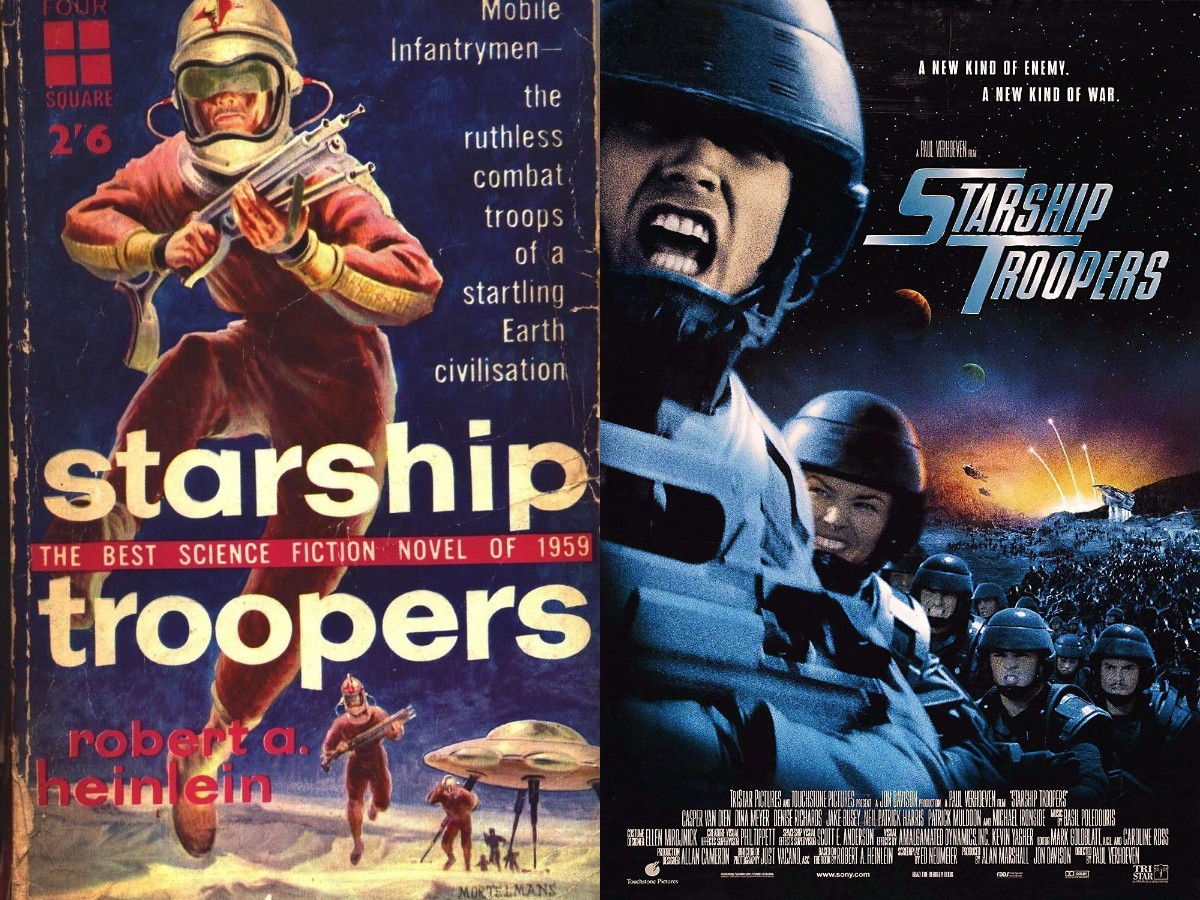
For those who have never seen the film, Starship Troopers is (VERY loosely) based on the Robert Heinlein novel of the same name, which was written in 1959. I say “very loosely” because, while the surface details of the plot are more or less the same, the tone and intent behind Heinlein’s book, is radically different from the film. The story of Starship Troopers (both the book and film) is set in the distant future; one where humans have mastered space travel and used it to begin colonizing other worlds outside of our galaxy. Along the way, humans came across “Klandathu”, a planet located on the opposite end of our galaxy, populated by giant, bug-like aliens. Even though these giant alien insects are extremely deadly, Earth has attempted to colonize the planet anyway, provoking the otherwise benign species to violently retaliate against them. Instead of respecting the arachnids’ home planet and cutting their losses, they present the bugs’ act of defense as an act of war and use their global government known only as “The Federation” to pump a steady stream of “anti-bug” propaganda into all forms of media. In doing so, the Federation enlists wave upon wave of young recruits into its interstellar war, all of them eager at the chance to slaughter this species completely out of existence. Primary among these young recruits is: Johnny Rico; a regular teenager from Buenos Aires who registers into the mobile infantry, against the wishes of his parents. The story follows Rico through the hardships of war, as he rises up through the ranks and becomes molded into a perfect soldier of the Federation.
Film historians may instantly notice the similarities between the plot structure of the movie and that of a notoriously well-known propaganda film called Triumph of the Will, which was made in 1935 as a recruitment tool for the Nazi party. This is no accident, but rather the whole lynch-pin of director Paul Verhoeven’s radical approach in adapting this pulp science fiction novel into a big-budget motion picture. Rather than making a straight forward adaptation of Heinlein’s story, Verhoeven, who regards the source material as “boring [and] really quite a bad book”, set out to turn Starship Trooper’s extremely jingoistic, pro-war novel on its head. While the book treats its message at face value as something cool and heroic, the film is fully aware that Heinlein’s story is a fascistic nightmare. The magic of the this choice is that, instead of attempting to “fix” these problematic elements of the book, it fully leans into them, giving the audience a full view of what Heinlein’s “perfect” facsist, authoritarian Earth would actually look like. The end result is a planet where humans have no democracy, citizenship is guaranteed only through military service, and for all the dazzling futuristic advancements they have made in technology and medicine, all it’s good for is killing bugs. The journey and eventual victory of these protagonists is therefore not meant as something for audiences to cheer, but rather, it is a cautionary tale of what America could become. Verhoeven states, “I decided to make a movie about fascists who aren’t aware of their fascism . . . this was about American politics. As a European it seemed to me that certain aspects of US society could become fascistic: the refusal to limit the amount of arms; the number of executions in Texas [etc.] . . .” (Verhoeven, as cited in How we made starship troopers, 2018). Make no mistake, the “heroes” of Paul Verhoeven’s Starship Troopers are Nazis, through and through. In one of the film’s final and most chilling moments, a commanding psychic officer stands before the “Brain Bug”, the giant slug-like monarch of the arachnid species, which has been captured and dragged out of its cave by the mobile infantry. It lays there surrounded by legions of armed Federation soldiers, trembling while this psychic officer (played brilliantly by Neil Patrick Harris) reads its mind. After a moment of silence, Harris’s psychic officer turns to the hordes of infantry men and women and proudly exclaims “IT”S AFRAID!!!!” which is met with exuberance, laughter, and practically euphoric elation from our heroes. If the film’s message had been lost on you before, this moment should make it clear: these people derive joy from witnessing the fear and suffering of their enemies.
Viewing the film now, its almost mind-boggling to know that this message seemed to sail past most American audiences, especially considering the blatant visual cues the film gives us. Take a look at Neil Patrick Harris’ character below, whose uniform is clearly a direct inspiration of the Nazi uniforms worn by the S.S.
“I borrowed from the films of Leni Riefenstahl to show that these soldiers were like something out of Nazi propaganda. I even put one in an SS uniform. But no one noticed”(Verhoeven, as cited in How we made starship troopers, 2018)
Verhoeven is a fascinating artist who brings with him an extremely unique perspective to aspects of American culture. Primarily, Verhoeven is continually drawn to our relationship with authoritarians, media consumption, patriotism, violence and fascism as can be seen in his previous films such as Robocop and Total Recall. His continued interest in exploring these themes and subjects has a large part to do with his childhood. Verhoeven is Dutch, and was born and raised under Nazi occupation of the Netherlands in the 1940s. His formative years were shaped by the most horrific display of fascism the world had ever seen and it has served to inform much of the art that he makes. In particular, much of his pitch black satirical sense of humor, his cavalier attitude towards violent imagery, and his penchant for maximalism likely all stem from being born into a place that is under Nazi rule. In this sense, I believe that Starship Troopers is oddly the most personal of Paul Verhoeven’s films. It serves to be the culmination of many of his points of interest as well as being the most direct statement against fascists in his body of work to date.
Starship Troopers is a film constructed to be two things at once. On one level the film exists as a satirical statement on the worst aspects of American patriotism and the dangers of succumbing to a militaristic rule. At the same time the movie has to exist and succeed as the very thing which it is satirizing: a big, loud, patriotic action movie. It was by design that the film would be advertised in this way; to convince American audiences (such as myself), that this was going to be a movie about our military kicking butt all over the galaxy. This appeal to our nationalistic tendencies and hunger for mindless action was, more or less, a Trojan Horse for Verhoeven to sneak in the real movie that he wanted audiences to see. That “real movie” which he successfully made is perfectly framed within the opening and closing device of the futuristic propaganda film. Verhoeven makes it clear that the entire film the audience is watching is all a part of this military recruitment advertisement. Johnny Rico and his friends, whether they are supposed to be film actors in a fictionalized recruitment ad or real people whose story is being filmed documentary style, are nevertheless all propaganda devices. By the end, we are reminded that our protagonist’s journey is structured with one goal in mind: to get you to join up into the ranks of the mobile elite. The film’s closing montage practically presents itself like that of a commercial for a series of action figures or a new video game, where you, yes-YOU, could be a hero just like the brave men and women of the Federation’s mobile elite! Are you a grunt infantry man like the heroic leader Johnny Rico? Maybe you want to be the wild man of the bunch like Johnny’s best friend Ace! Or are you the cerebral type? If so, you can be just like Carl, the Federation’s Psychic officer in the Games and Theory division. Regardless of what you are good at, the Federation will easily find a place for you. Verhoeven deftly handles these commercial sequences with the understanding of exactly how propaganda works. After all, he saw it happening first hand when he was a child.
In Verhoeven’s hands, the propaganda of this film is engineered in the same way real propaganda films work; by simplifying everything down to its basest level of black and white, good versus evil. It is articulated to prey upon our lethargy, our need for a simple, easy answer or a target to point our frustrations toward. Everything on Earth in this movie is presented as a very clean, futuristic, utopian society, down to the fact that all of our young protagonists look like living Barbie and Ken dolls. This is not an exaggeration, but rather a purposeful choice Verhoeven makes to support his overall thesis. It is also possibly his most divisive and extreme choice at that, but one which I truly believe serves to add to the film. While most movies are cast with attractive movie stars, Verhoeven’s casting process of this film was one which purposely sought out Hollywood’s most conventionally pretty actors/models, most of whom had limited acting experience. It is a choice that has its roots in the history of propaganda films as well as the visual shorthand from our oldest forms of storytelling, where all the heroes are good-looking and the villainous characters are hideous.
Most of the cast had previously acted on day time soap operas or prime-time teen romances like Beverly Hills 90210, such as two of its leads: Casper Van Dien and Denise Richards. Verhoeven chose this film’s crop of actors with the main vision that he needed actors who would have the look of people chosen for a propaganda film, and as is the case with most propaganda films, the looks would come first and would be the most important aspect. This tradition among propaganda films would typically lead to very wooden, stilted performances. Verhoeven knew that, while a potentially self-sabotaging choice for his own movie, it was an important ingredient for recreating the aesthetic of the propaganda film. His choice in casting went so far as to not even telling his actors they were making a satire because he needed his characters to believe in everything they were doing. These characters were not savvy to anything other than the world-view they had long been indoctrinated into. The end result of this choice lead to an ensemble of very limited actors, very much out of their depth, giving very campy performances, but this too is a critical component for the constructed reality of Verhoeven’s movie. He was recreating the aesthetic of these films and he recognized the performances as an extension of that aesthetic. While these choices would prove to be quite damning to the film’s immediate success in 1997, they would eventually help to preserve the film as one of the most uncompromising and bold approaches to a mainstream blockbuster film. It is very much worth noting that, since its release, Starship Troopers has had one of the greatest critical turnarounds in film history, with film fans from all over discovering it as a movie that was way ahead of its time which people are just now finally catching up to. Don’t just take my word for it, look at some of these recent reviews by critics that completely re-evaluate the film as high art…
“One of the most merciless satires of its time, Paul Verhoeven’s gung-ho, bug-squashing Reich-fest confused critics and audiences when it hit theaters in 1997; from the gruesome effects and rousing battle scenes to the insidiously quotable script (“Would you like to know more?”) and darkly stirring score, it’s just too damn well-made for its own good.”- Ignatiy Vishnevetsky, (2017) The AV Club
“… a ruthlessly funny and keenly self-aware sendup of right-wing militarism…[that] critiques the military–industrial complex, the jingoism of American foreign policy, and a culture that privileges reactionary violence over sensitivity and reason.”- Calum Marsh, The Atlantic
“The sci-fi satire arrived too early, and we’re hearing what it said 23 years too late.” – Joshua Rivera, The Verge
I won’t deny that a large part of my unbridled love for Starship Troopers comes from the odd journey I, and many others, have had with it over the years. I mean, how many films can you recall that began as the worst movie you had ever seen only to end up becoming one of your favorite movies 25 years later? On a broader level, I think a major reason why I love Starship Troopers so much is that, for me, it was the movie that completely upended my pre-existing notions of what movies were supposed to be. It challenged my way of thinking in many ways. It taught me the value of curiosity, of digging deeper into analysis before merely writing something off as “bad”. Most of all, my relationship to Starship Troopers taught me that changing my mind was not something to be embarrassed about, but to be embraced!
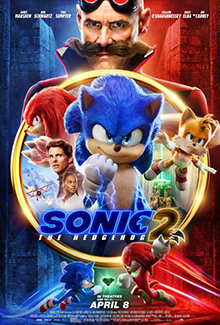
Ironically, for a movie about characters that treat the world with a simplistic black and white outlook,perhaps we have been too binary in our thinking on the films we consume. Sites like Rotten Tomatoes literally quantify a piece of art down to a percentage, awarding it either a “fresh” or “rotten” score. This site, along with social media sites such as twitter have given audiences much more of a voice and it has truly effected the film industry. Much like an algorithm, the film industry has attempted to cater to the audience’s tastes and demands. In recent years we have witnessed fan campaigns successfully force studio’s hands in releasing specific cuts of movies as well as completely reanimate a character for the entirety of a film that was already finished (Sonic the Hedgehog). While you may be glad that our blue furry friend finally resembled his video game counterpart, I cannot see this development as anything but extremely harmful to filmmaking. If I have learned anything from my humbling experience with Starship Troopers, it’s that I don’t always know what I want in a film. I may think that I do, but that very idea can change when presented with something new. In today’s “fan-driven” landscape, there is no way anything as daring, original, or as weird as Paul Verhoeven’s Starship Troopers would ever make it into theatres, let alone at the scale and budget that it was made with. The current studio approach, which seeks to cater to fan-service or create an algorithm for “quality control”, may succeed in fewer films that turn out to be bombs at the box office, but it also sets very rigid parameters on the level of creativity, ingenuity and originality that a film can have. In conclusion, I believe that I would rather have a ton of movies being made that I see and I end up hating passionately, then very well-made movies that make me feel nothing at all. Starship Troopers instilled in me the belief that any film that garners a strong response from you, positive or negative, is one that is worthy of a reappraisal, a deeper investigation, a second chance. Who knows? Maybe the worst movie you ever saw is one re-watch away from becoming an all-time favorite.
(EXTON, PA) – Recognizing the frustrations in access to mental health care and the lack of information about what resources were available, Pennsylvania State Representative Kristine Howard began holding the Mental Health Fair in 2021. She noticed the urgent need for mental health resources and education, which had only been exacerbated by the pandemic. Many people were turning to her office for help finding care for their loved ones, and it was a natural decision to hold a Mental Health Fair to help inform the public about what resources were available.
This year, Representative Howard and the Chester County Library will co-host a Mental Health Fair on Thursday, September 8 from 3 -5 p.m. in the library’s Struble Room. Visitors can connect with resources from several local agencies and listen to local experts talk about the current condition of mental health in Chester County. Registration is not required.
Speakers at the fair will include:
Kristen de Marco, Executive Director of Gateway Horseworks
Colleen Drake, Assistant Director of Business Development at Belmont Behavioral Hospital
Gerry Gonzalez, Community Relations Representative at Child Guidance Resource Centers
Leslie Holt, Co-Founder, and CEO of A Child’s Light
Michael Ivers, EMS Operations Chief for Chester County Emergency Response
Kate Lannan, Community Services Director at A Haven
Katie McGrath, Director of Outreach, and Olivia Kennedy, Outreach Liaison, at Sanare Today
Deborah Willett, Program Coordinator of GRANDFamily Connections of ChesterCounty at Coatesville Center for Community Health
As an accessible community hub and advocate of circulating health literacy within the community, the Chester County Library is committed to helping connect the community with local mental health resources available to them. The Chester County Library is hoping to extend a lifeline to its neighbors and also demonstrate that they are an inclusive resource for all community needs. This event will give the community at large an opportunity to have open conversations without judgment and thereby also help reduce the stigma surrounding mental health. For more information please visit https://bit.ly/3zSgl0A or contact the Chester County Library Reference Desk at 610-344-5957.
Due to the easing of COVID restrictions, the Board of Trustees of the Chester County Library System/Chester County Library will now be hosting their monthly board meeting as a hybrid offering. If you have always wanted to attend a meeting but haven’t had the time, this is your opportunity. Please click on this link at 8:30 a.m. on Tuesday August 16 to join the Chester County Library System Board Meeting virtually; or attend in person at the Coatesville Area Public Library, 501 E Lincoln Highway, Coatesville, PA 19320. The Chester County Library Board Meeting will immediately follow. Find the Chester County Library Board Packet here.
If you are a person with a disability and wish to attend this meeting and require an auxiliary aid, service, or other accommodation to observe or participate in the proceedings, please call Chester County Library’s Administration Office at 610-344-5600 or email lharshaw@ccls.org to discuss how we may best accommodate your needs.
Chalk our Walk! We’re calling all artists to help decorate the sidewalk around the Library to celebrate the reopening of our parking lot. Decorate a block yourself, or share one with family, friends, or your organization. We’ll provide the supplies, you just bring your imagination!
Come by any time between 6:00 and 7:30, but please register first so we can guarantee everyone a spot. Register here.
All drawings must be family-friendly–no offensive, graphic, or political illustrations and no foul language, please.
CHESTER SPRINGS― Join us via the Henrietta Hankin Branch Library on Thursday, August 11, at 1 p.m. for a virtual discussion of DRIFT, a documentary film about New Jersey’s Barnegat Bay. Prior to the discussion, registrants will have special access to the film beginning August 4. The discussion will be led by Avery Lentini, Executive Assistant and Policy Advocate with Save Barnegat Bay. The organization, whose mission is to restore and protect the Bay and its ecosystem, has become a strong and independent voice for the Bay throughout the watershed, including all of Ocean and part of Monmouth Counties.
DRIFT, produced in collaboration with Monmouth University Production Services and directed by Erin Fleming, tells the story of Barnegat Bay through the voices and eyes of people who cherish the Bay as a natural, recreational, and economic resource for the local community and all of New Jersey. The film allows the viewer to DRIFT through 50 years of complex issues through a series of short vignettes, using a variety of perspectives, viewpoints, and experiences. Located on the east coast of New Jersey in Ocean County, the Barnegat Bay runs from the town of Bay Head all the way down to Little Egg Harbor. It is 42 miles long and has an area of 64 square miles.
Register here for this special event. For additional information, please contact Barbara Vitelli, Reference Librarian at bvitelli@ccls.org.
A sophomore slump refers to an instance in which a second, or sophomore, effort fails to live up to the relatively high standards of the first effort. (1)
It’s exciting when a new filmmaker manages to make a big splash with their first film. An impressive debut can, and often does, generate a lot of interest from studios and audiences alike. For many movie lovers, it immediately elicits the following statement:
“I can’t wait to see what they do next….”
Suddenly, there is the burden of expectation. Audiences who loved a director’s first film are now excited by the prospect of a whole career of great films. Off of just one great movie, we begin crafting our own narratives, asking questions like “Could they be the next Speilberg? The new Hitchcock?” Unfortunately for most directors, the second movie is often the one that faces the most scrutiny. It could be the added pressure of audience expectations or working with an expanded budget; either way, the second time around proves to be one that rattles many film makers and results in movies that are more or less considered to be an underwhelming follow up. This has become known among film and music circles as the dreaded “sophomore slump”.
While the sophomore slump has been well documented in the film industry, there are plenty of examples of GREAT follow-up films; some of which have become remembered as the high mark in a director’s career. All these films can be found in the collection of our Chester County Library Catalogue.
This month we at the Chester County Library Multimedia Department are giving you a list that proves that sometimes second truly is the best.
In 1979, director Ridley Scott followed up his debut film The Duellists (1977), with the Sci-Fi Horror masterpiece Alien. The film went on to become an instant classic , spawning its own franchise of 5 subsequent sequels with more on the way. Scott continues to have one of the most prolific careers a director can ask for, with a lifetime of impressive credits including: Blade Runner, Legend, Thelma & Louise, 1492, White Squall, Gladiator, Black Hawk Down, Kingdom of Heaven, Prometheus, Alien: Covenant, All the Money in the World, The Last Duel and House of Gucci.
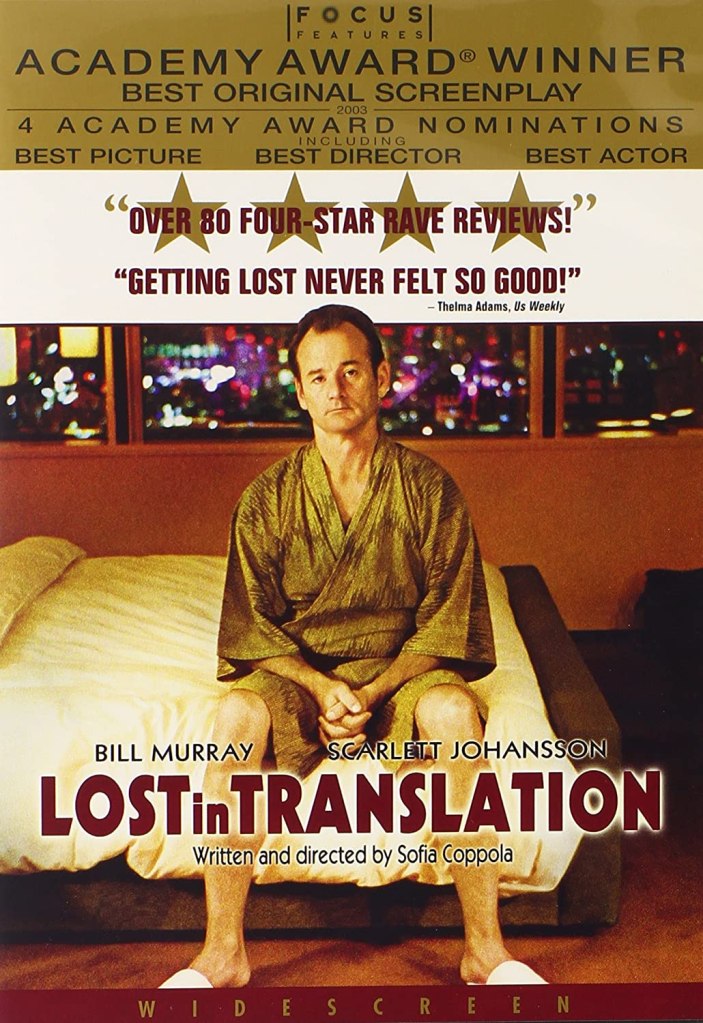
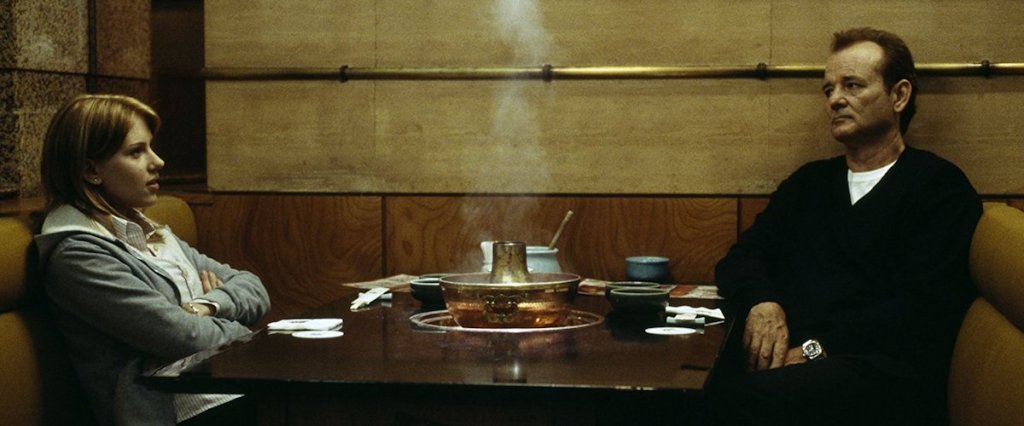
It is not easy carving a name out for yourself as a filmmaker. Now imagine how hard it would be, if your father was a director known for making what many consider the greatest film ever made: The Godfather… It is still astounding to me that Sofia Copolla climbed out of such a looming shadow as her father’s career and truly created a style of film making all her own. Her first film, The Virgin Suicides, proved to many that Sofia was a true talent and could make a great film. It was her second film, Lost in Translation, which cemented her as a legend in her own right. Lost in Translation received critical praise and went on to be nominated for four Academy Awards including: Best Picture, Best Director, Best Actor (Bill Murray), and Best Original Screenplay (which Sofia Coppola won). Sofia Coppola continues to have an illustrious career, making unique and expressive films such as Marie Antoinette, Somewhere, The Bling Ring, and The Beguiled.
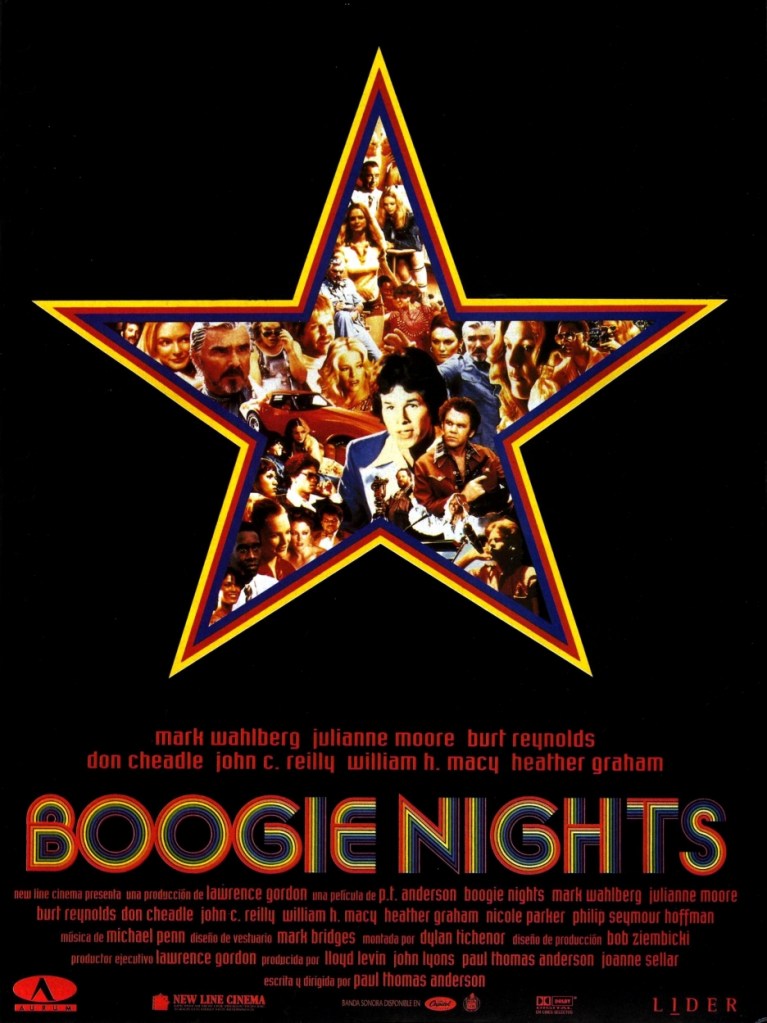
Paul Thomas Anderson was just 26 years old when his first film Hard Eight premiered and gained some significant attention at the Sundance film festival. I guess his youth helps explain how in just one short year, he churned out the magnum opus Boogie Nights, which chronicled the pornographic film industry spanning over the entire decade of the 1970s. It is a massive movie filled with incredible performances from an all star cast including: Phillip Seymour Hoffman, John C. Reilly, Julianne Moore, Burt Reynolds giving what is truly a career best performance, and most famously it is the film that convinced audiences that Mark Wahlberg was a true movie star. Anderson is no slouch, and continues to make some of the biggest and most artistically relevant films of this day and age. Later films in his career included Magnolia, Punch Drunk Love, There Will Be Blood, The Master, Inherent Vice, and one of this year’s best films: Licorice Pizza!
After his 1970 feature The Landlord did moderately well, Hal Ashby’s second film Harold & Maude proved to become a well loved cult classic among audiences; so much so, that even in a long career with many well-received films, this is still considered one of his best.
While he admittedly had plenty of experience directing for the stage, Bob Fosse had only one previous film under his belt, when he directed the film that would forever change movie musicals. After a rather lackluster debut, with 1969’s film adaptation of stage show Sweet Charity, Fosse turned the tides with Cabaret, which went on to winning eight academy awards at the 1972 Oscars including Best Director, which he famously beat out Francis Ford Coppola who was nominated for The Godfather. Fosse’s filmography was incredibly short but Cabaret was as great and as big of a success anyone could hope to have with only the second film in their career.
John Carpenter is the master of genre film-making, but his stamp on the Horror genre is one that remains unparalleled to this day. Following his first major motion picture (we aren’t counting his student film Dark Star here), the crime/drama Assault on Precinct 13 is not an easy task. As far as first film’s go that movie is a hard act to follow. In fact the only way to top yourself is to absolutely change the landscape of film. Lucky for Carpenter, and for us, he did just that by making the ultimate Horror movie slasher with the original Halloween. There have been many slashers since, but none that served as such a monumental game-changer as this one.
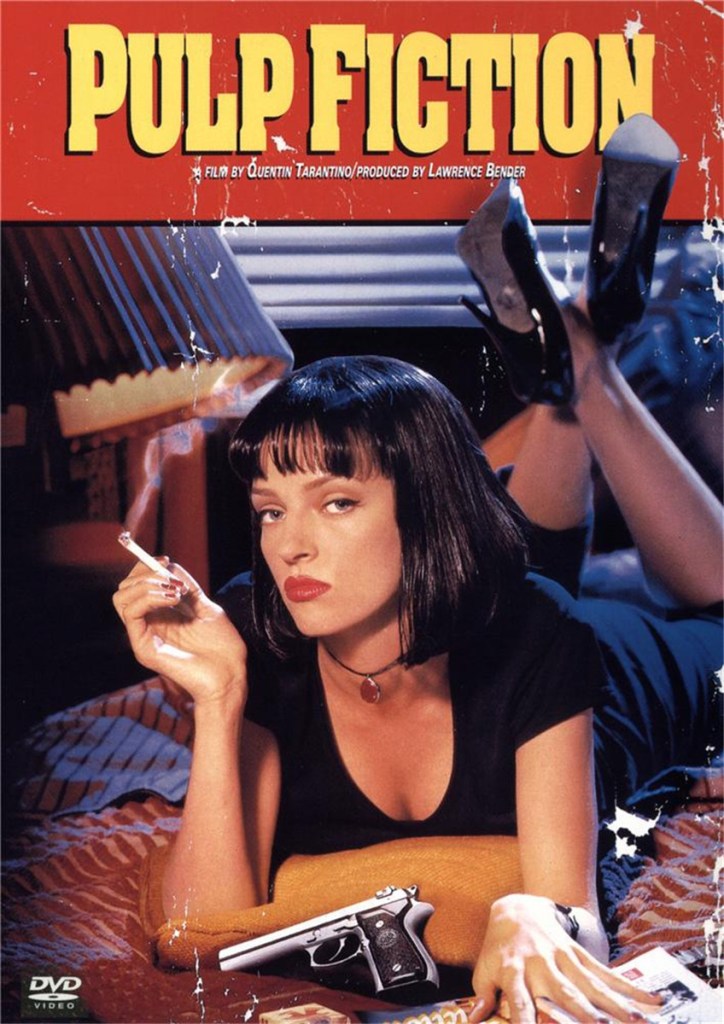
Possibly one of the biggest and most important step ups in a directors career is Quentin Tarantino’s progression from his exciting debut hit Reservoir Dogs to the cinema classic Pulp Fiction. While Reservoir Dogs is a fun fan favorite, it seems ironically sophomoric in comparison to the much more mature, better scripted, better acted, better shot follow up of Pulp Fiction. While the style and tone of both remain undeniably Tarantino, Reservoir Dogs feels like a rough draft or practice round for the Tarantino’s legendary and beloved second feature film.
Sometimes following up a movie that is completely from a different genre can be a great way to not become pigeon-holed as one type of filmmaker. For the legendary duo of the Coen Brothers that turned out to be the perfect move for their career, when they followed up their gritty and tense crime drama Blood Simple with their zany cartoonish love story between an ex cop and ex criminal that will make you howl with laughter!
The Wachowski Sisters are absolute filmmaking game-changers! They have constantly broke down boundaries and continue to push audiences to expand their minds and think outside of the box. It is insane to look back and realize that after their tremendous, but criminally underseen neo noir Bound, the made what was only their second major studio film which turned our to be The Matrix. As far as second movies go, there is no bigger jump in impact, quality and excellence in film making than making The Matrix as your sophomore film. That statement would be true following almost any film in a directors filmography and that is truly saying something.
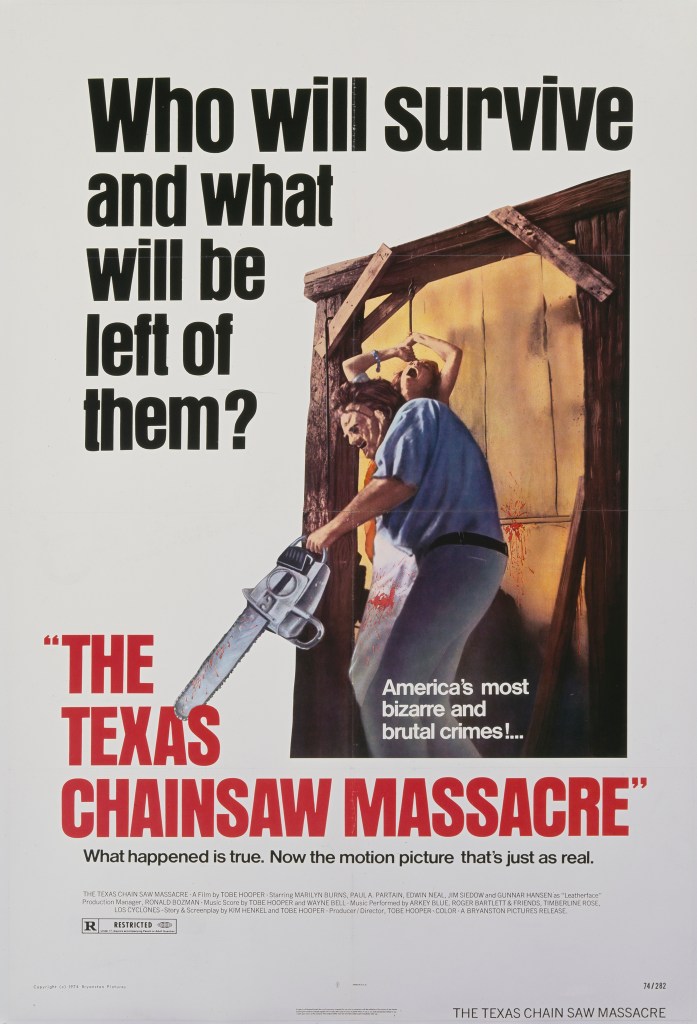
I will fully admit to still never having seen Tobe Hooper’s first film, Eggshells. While that film did not seem manage to much of a cultural impact, Hooper’s second film was an absolute lightning rod of a horror film and stands today as one of the most effective horror films ever put to film. The Texas Chainsaw Massacre invented an entire sub genre of horror, introducing a gritty, unpolished style that changed the landscape of horror films forever. Not too shabby for your second film.
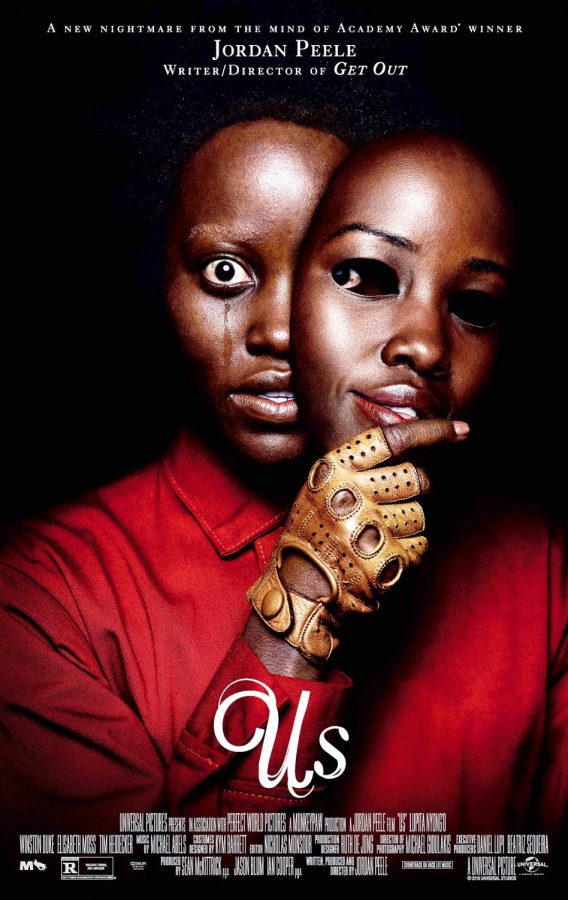
Finishing out our list is what could be possibly one of the best second films of recent memory. With Jordan Peele’s newest horror film Nope already in theatres, its a perfect time for audiences to go back and appreciate just how great his second film Us was. After Get Out served as on of the most impressive debuts that any Horror filmmaker could have hoped for (it even nabbed Jordan Peele an Academy Award for Best Screenplay), the prospect of following it up with a second film was a daunting prospect to say the least. Us managed to ratchet up the terror and show true improvements and strides in his approach to cinematography and composition. Us was a big success at the box office and yet it is still one of the most criminally underrated Horror films of the last ten years.
A “sleeper” in movie parlance is an unheralded or dismissed film whose success confounds critics when it catches fire with audiences. Through word of mouth and a mysterious penetration of the culture, sleepers become huge commercial successes despite, in many instances, low budgets and no-name casts. Sometimes, mostly in the pre-VHS/DVD era, an underperforming movie might disappear only to resurface to acclaim after the producer or director gains control of the film and makes a deal with exhibitors to bring it back into theaters. Often the return on production is astronomical. Looking back, we see that sleepers are emblematic of independent film production and distribution, in short, the post-studio system era.
Significant Sleepers:
Dr. No (1962)
This first feature-length film based on the exploits of Ian Fleming’s MI6 British Agent 007, aka James Bond (Sean Connery), heralded the cinema’s longest-running movie series. Technological gimmicks that came to define the ongoing cycle were held to a minimum in this and the sequel From Russia With Love, both of which relied on fisticuffs, knives and pistols rather than futuristic cars, rocket jet-packs and lethal bowler hats. For Dr. No, critical reaction was all over the map. The Daily Express said it “was fun all the way,…” while the Vatican called it “a dangerous mixture of violence, vulgarity, sadism and sex.” Bond definitely has a hard edge here, depicted most overtly as he feigns indifference when Professor Dent (Anthony Dawson) pulls out his Smith & Wesson and fires six shots. But with blanks. Bond smirks as he returns deadly fire with his Walther. Dr. No cost $1.1 million and made $59.5 million.
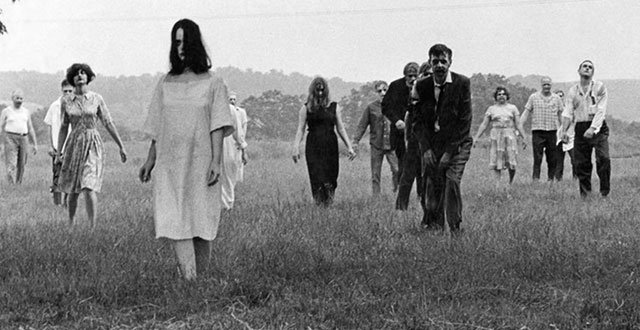
Night of the Living Dead (1968)
A farmhouse provides temporary safety for a disparate group of humans beset by shambling, pasty-faced and flesh-devouring “things.” Drive-ins were showing this three years after its premiere. Made on the proverbial shoestring budget, it eventually grossed $30 million. It was a watershed moment for cinematic zombies, an instant cult film for aficionados of the undead. Remakes and sequels followed. Variety was aghast: “Casts serious aspersions on the integrity and social responsibility of its Pittsburgh-based makers, distrib Walter Reade, the film industry as a whole and exhibs who book the pic.” (Variety, October 16, 1968) The literate horror film-specific fanzine Castle of Frankenstein (July 1970) looked askance: “Putrid, with indistinct, bad acting and needlessly gruesome bloodletting.” In CultMovies, Danny Peary wrote, “If ever a picture became a hit because of favorable word-of-mouth, this is it. Horror aficionados stumbled upon it in run-down theaters on New York’s Forty-Second Street or in drive-ins in the sticks, and soon spread the word that they had ‘discovered a masterpiece of the genre’.” In Medium Cool: The Movies of the 1960s, Ethan Mordden echoed Peary: “It was, in fact, seen only sporadically at first, not truly enjoyed till its cult status began to gather in the early 1970s, when it became one of the first titles to popularize the ‘midnight screening’.”
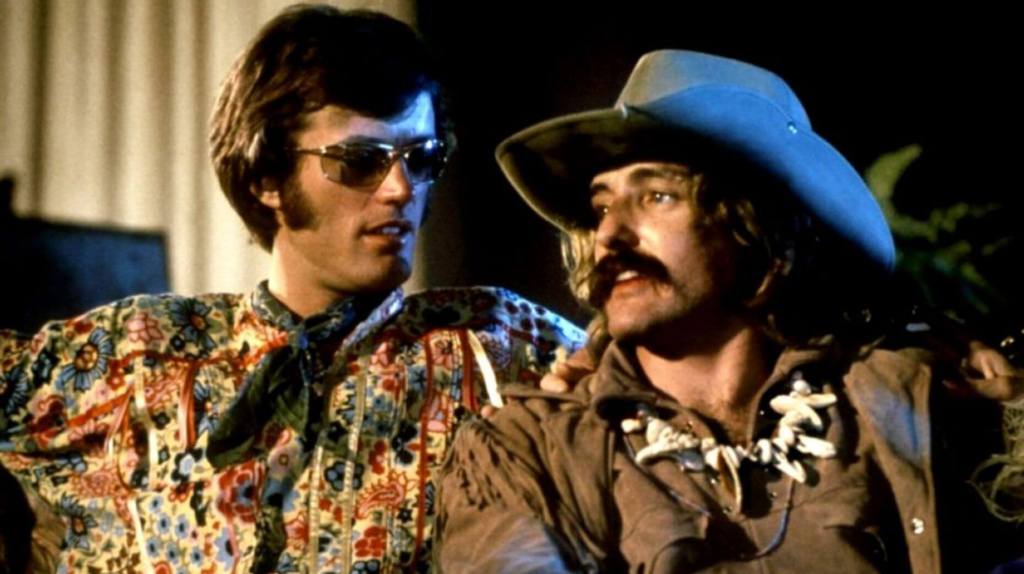
Easy Rider (1969)
Dealing cocaine to fund a cross-country road trip from California to New Orleans, two bikers (Peter Fonda and Dennis Hopper) aim not only to participate in Mardi Gras but to discover the authentic America. Along the way they encounter bigoted police, a “free love” commune, and an alcoholic lawyer (Jack Nicholson). Variety said, “Script is literate and incisive and Hopper’s direction is fluid, observant and catches the pictorial poetics with feeling.” It cost $400,000 and took in $60 million. The tagline: “A man went looking for America. And couldn’t find it anywhere.” In Medium Cool,Ethan Mordden concluded, “Above all, Easy Rider was big because it became prominent. Little films didn’t, as a rule, which obscures the history of the B in its time of highest development.”
Harold and Maude (1971)
A seemingly suicidal young man (Bud Cort) finds a kindred but life-affirming friend and lover in the aging and distinctly eccentric Maude (Ruth Gordon). Cat Stevens provided the evocative score for this black comedy that foundered during its initial release but picked up steam through word of mouth. Roger Ebert gave it one-and-one-half stars, but in 2017 Chicago Tribune critic Mark Caro, responding to a poll, said, “I’m sorry, Harold and Maude, for denying you for so long. You’re my favorite movie once again.” Variety (December 16, 1971) said, “Harold andMaude has all the fun and gaiety of a burning orphanage.” Bud Cort said much later that the film made $350 million. The best analysis of this movie is probably found in Cult Movies: “Harold and Maude is a film about death and resurrection, where death and life continuously overlap.” Ruth Gordon was moved by New York Times critic Vincent Canby’s negative review to write him a letter that offered her opinion that he should have watched the film with a normal audience, not a screening room with a bunch of fellow critics.
Billy Jack (1971)
Tom Laughlin starred, directed and wrote with his wife Delores Taylor this anti-authority action film in which the title character uses martial arts skills to ameliorate the dark cloud under which the Freedom School’s students live, i.e., a corrupt county government and those who would send wild horses to the glue factory. After the American International Pictures deal fell through, 20th Century-Fox picked it up, but that partnership waned, too, and Warner Bros. released the film and it made $10 million. Laughlin then got hold of it and re-released it and the grosses exceeded $32 million. “The industry shook its collective head in disbelief,” wrote Peary in Cult Movies, adding that it was sometimes pretentious but energetic and not badly made. Variety (December 31, 1970) praised Laughlin and Taylor. There is a disturbing (and not in a good way) prequel, The Born Losers, and two sequels.
The Rocky Horror Picture Show (1975)
In Cult Movies, Danny Peary called this musical comedy horror flick “the ultimate audience participation film.” The story: when their car breaks down, an engaged couple, Janet (Susan Sarandon) and Brad (Barry Bostwick) find themselves near a castle in which a Transylvanian convention is taking place. They encounter various celebrants, including the seductive bisexual mad doctor, Dr. Frank-N-Furter (Tim Curry) and his creation, Rocky. The movie cost under $2 million and made over $200 million—and more, counting ongoing revivals. Variety thought the film failed to capture the spirit of the stage play. “The sparkle’s gone.”
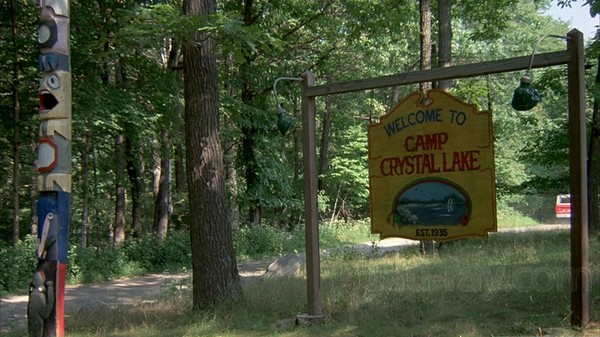
Friday the 13th (1980)
On the heels of 1978’s Halloween came this slasher film with another seemingly unstoppable madman. It cost $550,000, made close to $60 million, and spawned a franchise. Said Science Fiction, Fantasy and Horror Film Sequels, Series and Remakes (Vol. I, 1997), “The filmmakers, we think, were basically intrigued by the success of Halloween (and that film’s obvious progenitors). The premise of each film bears no closer scrutiny than do the fireside horror stories that are frequently included therein….The plots…are stripped down to the bare essentials of horny teens, stupid adults, isolated boondocks and mad slasher.”
Clash of the Titans (1981)
Critical response was mostly ho-hum other than praise for Ray Harryhausen’s stop-motion creatures in this movie version of the Perseus myth. Think Medusa! “Release the Kraken!” became a catch-phrase. It cost under $20 million to make but grossed in excess of $70 million.
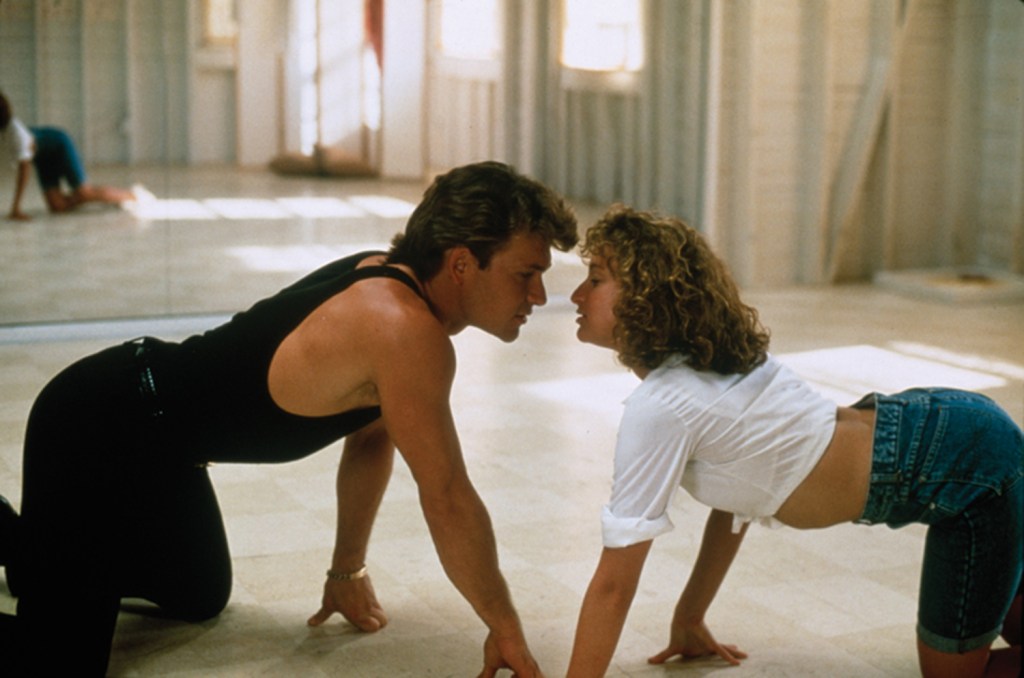
Dirty Dancing (1987)
Dance instructor at a Catskills resort in 1963, Johnny Castle (Patrick Swayze) romances the young guest Frances “Baby” Houseman (Jennifer Grey). “Nobody puts Baby in the corner” became a catch-phrase. Some major critics were unimpressed when it premiered. Variety liked the production values, “some nice dance sequences,” and Jennifer Grey’s performance, but Swayze’s character was unconvincing. Roger Ebert was “Thumbs Down,” citing an “idiot plot.” His partner Gene Siskel gave it a “marginal Thumbs Up.” By contrast, the public went gaga. A budget of $4.5 million produced a film that made $214.6 million.
The Blair Witch Project (1999)
Presented as a “found footage” documentary about the search for Maryland’s Blair Witch, the film cost no more than $500,000 and ended up making over $248,000,000. The New York Times (July 14, 1999) was impressed that the filmmakers made something out of nothing, and Rolling Stone (July 30, 1999) said it would “creep you out of your skin.”
My Big Fat Greek Wedding (2002)
Nia Vardalos turned her play about a Greek- American woman (Vardalos) falling in love with an Anglo teacher (John Corbett) into a thunderous movie hit. Each family’s foibles and idiosyncracies produced many laughs. It never took the weekly #1 spot but had “legs.” Audiences would remember and cite various amusing episodes. Production costs were around $6 million and it made over $368 million.
Lost in Translation (2003)
American movie star Bob Harris (Bill Murray) arrives in Tokyo to film a Suntory whiskey commercial and stumbles on recent Yale graduate Charlotte (Scarlett Johansson), whose photographer husband leaves her alone for long stretches of time. Both afflicted with ennui, Charlotte and Bob band together. Nothing much was expected of director Sofia Coppola’s little film but critics were invariably positive. It cost $4 million to make and generated $118 million.
Lucy (2014)
This wild sci-fi actioner (“It’s tough not to be dazzled by this operatic action film’s blend of pop-philosophy, biology and silly delirium,” said USA Today on July 24, 2014.) with Scarlett Johansson as an unwilling drug mule who gains incredible mental powers that translate into physical prowess cost $40 million and made over $400 million in spite of the R rating—beating out the predicted weekend champ, Hercules. Curiously, violence rather than nudity or foul language, prompted that rating.
Chef (2014)
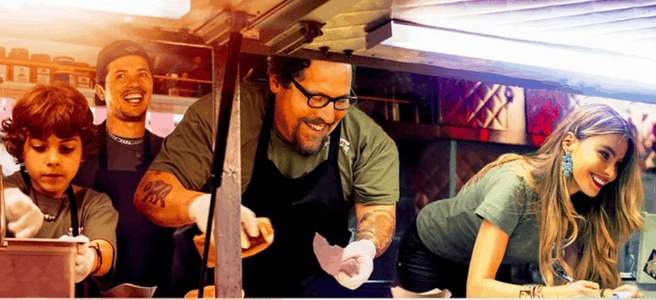
It cost $11 million and arrived with little fanfare but took in $48 million. As the title character, Carl Casper (Jon Favreau) loses his job at an upscale eatery but finds fulfillment manning a food truck and trekking across the southern tier of the country. It’s summer and his son goes along. Performers John Leguizamo, Scarlett Johansson, Dustin Hoffman, and Robert Downey, Jr. make appearances. Sofia Vergara plays Casper’s estranged wife. It’s a charming, mouth-watering tale. Critics were generally favorable. The Los AngelesTimes (May 8, 2014) congratulated Favreau’s decision to avoid “done-to-death family dynamics, forced obstacles and predictable responses for authentic interaction, organic humor and a hopeful vitality.”
The Greatest Showman (2017)
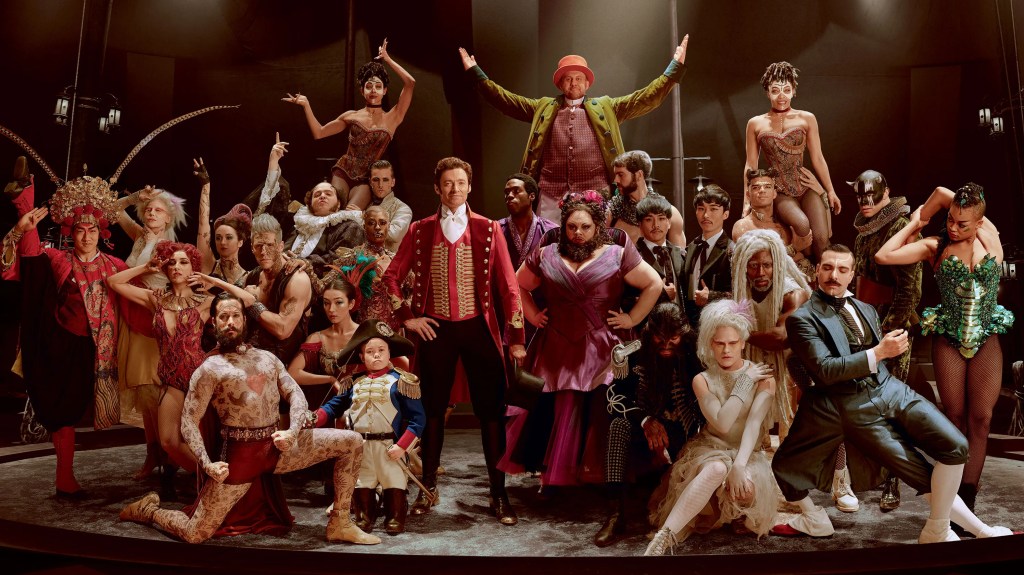
A high-concept musical about the life of P. T. Barnum starred Hugh Jackman, Michelle Williams, Rebecca Ferguson and other “names.” Like My Big Fat Greek Wedding, it had “legs.” A disappointing first week was compensated for by a final gross of $434 million against production costs of $84 million. Critics were mostly positive with word of mouth at least as responsible for its success. Library DVD rentals were high.
By Kim
References
Unless stated otherwise, film grosses are from Wikipedia.
Elley, Derek. Variety Movie Guide. 1991.
Gordon, Ruth. My Side:The Autobiography of Ruth Gordon. 1976.
Mordden, Ethan. Medium Cool: The Movies of the 1960s. 1990.
The Chester County Library Evening and Afternoon Book Discussion groups have returned to in person meetings. The other groups are remaining virtual. Please see our August titles and dates below. The online groups are being held via Zoom. We are requiring registration for these online book groups in order to send out the Zoom meeting information. Click on the date below to register. Information on our adult book groups can also be found on our website: https://bit.ly/chescolibs-bookgroups.
The Page Turners Book Group and the Whodunits Book Group will return in September.
Registration is required for all book groups. Registration will close at least 2 hours prior to the scheduled start time of the book group. A Zoom link will be emailed to registrants 2 hours before the book group starts. Make sure to check the email address you registered with to receive the link. You do not need a Zoom account to attend the virtual book group.
These programs support the PA Forward Civic and Social Literacy Initiative.


























 Stay Connected with Chescolibraries