Been watching K-Dramas for years and want to meet new K-Drama lovers? Love BTS but don’t know much about Korean television? Break out the kimchi and join us to watch an episode of one the hottest Korean shows, then pop onto a Zoom call to chat about the show, the newest Korean music, and Korean culture – all from the comfort of our own homes.
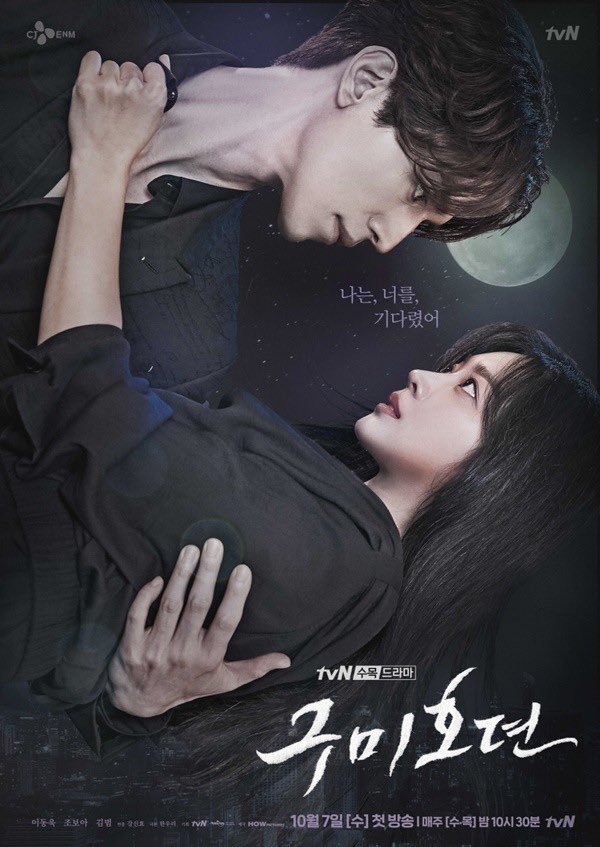
On March 13, from 3:00pm – 5:00pm, we will be watching the pilot episode of “Tale of the Nine-Tailed.” Lee Yeon, a nine-tailed fox with the ability to transform into a human form, spends his days eliminating dangerous supernatural beings while also searching for the reincarnation of his lost love. Nam Ji-ah, a television producer, works on a show that searches for proof of the existence of supernatural beings. When Lee Yeon’s unsavory half-brother takes an interest in Nam Ji-ah, Ji-ah might just get that proof she needs – plus so much more than she bargained for.
Ages 16+
Registration is required to receive the Zoom link and viewing instructions. Register on the event calendar here.
For questions, please email us at: ccljtc@ccls.org.
Carver Dana Andrews was one of 13 children born on a Mississippi farm in 1909. (Actor Steve Forrest was his brother.) In 1931 he tried his hand at singing in Los Angeles. His film career began when given a contract with Samuel Goldwyn Productions but he became more of a fixture at 20th Century-Fox. He was versatile, playing detectives, westerners, soldiers and sailors. He came in for some small praise in David Shipman’s The Great Movie Stars: The International Years: “…he never got in anybody’s way, his sober-citizen appearance made its own mild contribution to the texture of the films in which he appeared. He projected a certain authority, grave-faced and grave-voiced, a certain masculine concern and an air of restrained heroism—all qualities used well in his two best films, The Ox-Bow Incident and A Walk in the Sun.” (At least Andrews made the book. Shipman was often unusually harsh in his examination of many actors’ careers. In his short analysis of Andrews in The Best Years of Our Lives, he said he was “good” under director William Wyler but that his co-star, Virginia Mayo, soon to be a frequent Danny Kaye partner, as Andrews’ trampish spouse, gave “her one good screen portrayal….”—despite dozens of star outings!) In The Hollywood Story, Joel Finler ranked Andrews an “important star” in his 20th Century-Fox star pantheon chart.
Andrews rose through the ranks and early on, as Shipman observed, received his best early notices as a lynching victim in 20th Century-Fox’sThe Ox-Bow Incident (1943) with Henry Fonda in the lead. Back at Goldwyn that same year, he was directed by Lewis Milestone, heralded helmsman of All Quiet on the Western Front (1930) and frequent future combat films, includingThe North Star, a propaganda film extolling Ukrainian resistance to the German invasion of the Soviet Union. Andrews was in that, too, as well as Milestone’s The Purple Heart (1944).
Then came Laura (1944), one of the most universally praised noir films.
Eddie Muller, host of TCM’s series Noir Alley, considers Andrews the finest exemplar of the ubiquitous fedora worn by cops and hoods alike.
Andrews never stopped acting, in film and on stage. He was a fixture as military officers in the 1960s. See The Satan Bug (1965), In Harm’s Way (1965), Battle of the Bulge (1965), and The Devil’s Brigade (1967). Andrews was dogged by alcoholism for many years but finally licked it and spoke on behalf of the National Council of Alcoholism in 1976. Andrews died in 1992 at age 83.
Dana Andrews’ Most Significant Movies
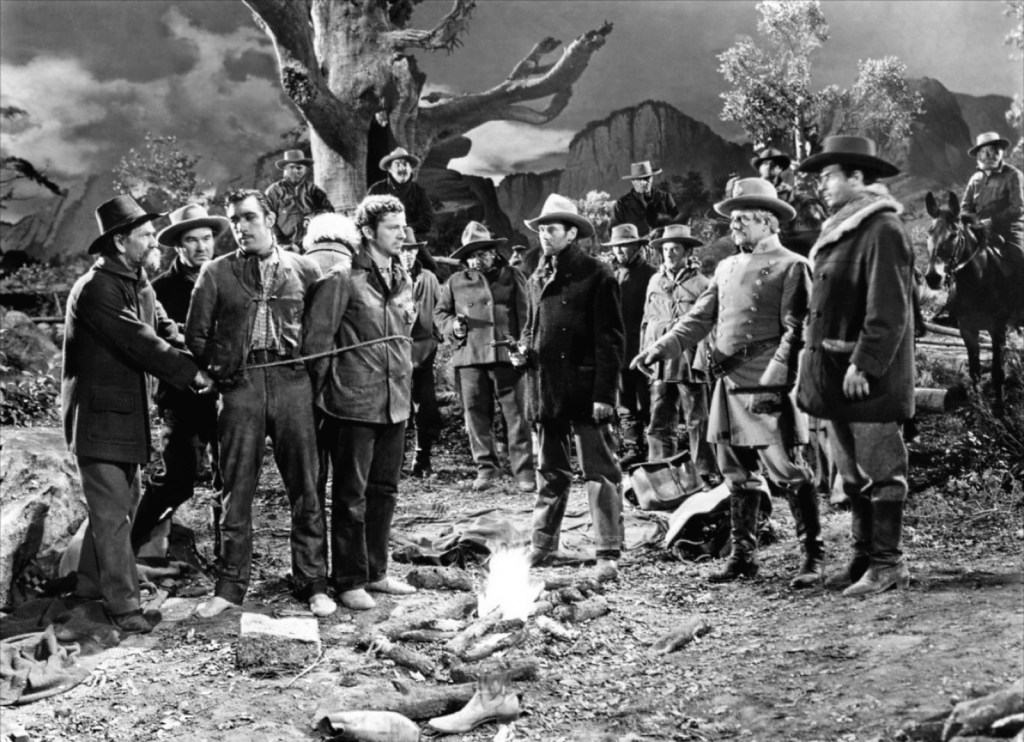
The Ox-Bow Incident(20th Century-Fox, 1943) A vigilante posse rounds up three men (Andrews, Anthony Quinn, Harry Morgan) they think are cattle rustlers. The well-taken arguments against a lynching by Gil (Henry Fonda, who himself witnessed mob violence and the ensuing lynching of an African-American in Omaha in 1919) are disregarded.
The Purple Heart (20th Century-Fox, 1944) Downed U.S. airmen are put on trial by the Japanese. It’s a “kangaroo court” and they are tortured and scheduled for execution. Andrews is the officer in charge of the prisoners.
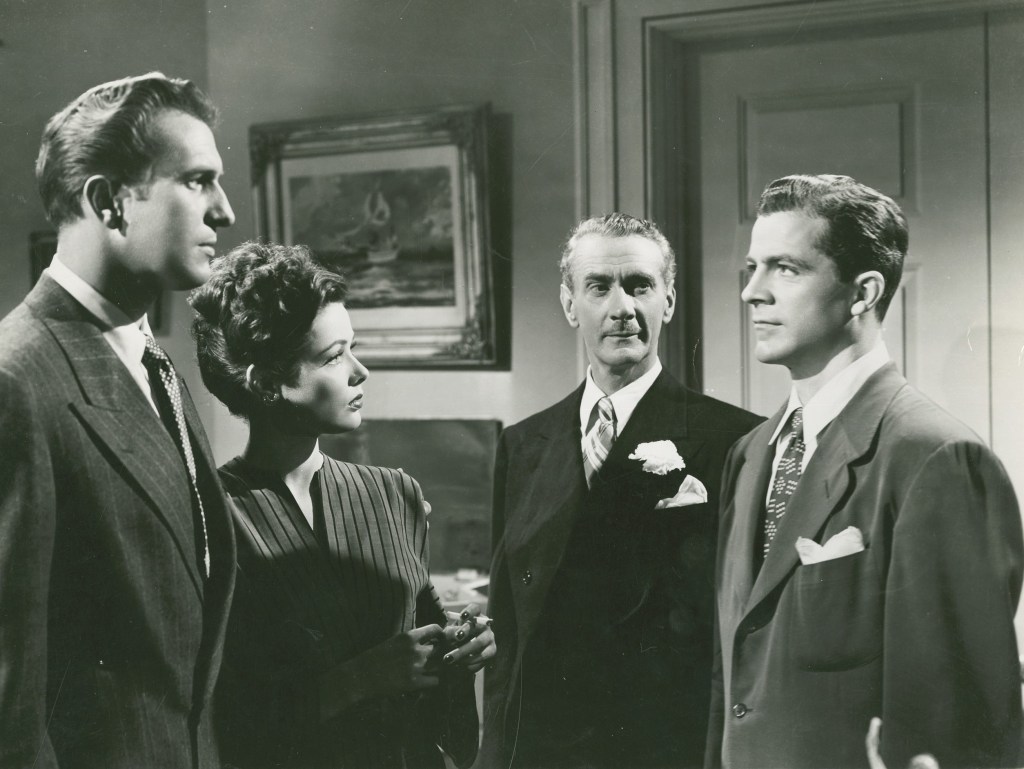
Laura(20th Century Fox, 1944) In probably one of the top six of the crime subgenre known as “film noir,” Andrews begins his era as a fedora-wearing detective, here investigating the presumed murder of the beautiful Laura (Gene Tierney), whose portrait haunts him. The Los Angeles Times reviewer was much impressed by individual scenes: “There is one that is outstandingly enacted by Andrews, while he is alone in the apartment of the murdered woman. A portrait hanging on the wall reveals the magic that she exerts and is a symbol of this spell. It is action carried out without a single word being spoken, yet it is remarkably compelling. The audience at the Fox Wilshire last night quite evidently fell under the hypnotic influence of the scene, for under ordinary circumstances it would have appeared too protracted. But its force was fully conveyed.” The Film Noir Encyclopedia extolled Andrews’ performance: “Overshadowed by Clifton Webb’s marvelously idiosyncratic performance as Lydecker, Andrews’ quieter portrayal deserves more attention. With his haunted eyes, taut yet sensitive mouth, and softly insinuating voice, Andrews is a highly evocative screen presence, conveying more with a look than many actors do with a soliloquy. As the pragmatic, unromantic cop who, when asked by Lydecker if he’s ever been in love, replies, ‘A doll in Washington Heights got a fox fur out of me once,’ he is only able to love the perfumed ghost of a woman he believes is dead, and who becomes a dream expressed in a work of art.”
State Fair(Fox, 1945) Andrews could sing a little, but the studio forgot and he was dubbed. Wearing a straw fedora, he squires Jeanne Crain around the Iowa State Fair in this famous piece of Americana featuring two Rodgers and Hammerstein songs that became standards: “It’s a Grand Night for Singing” and “It Might As Well Be Spring.”
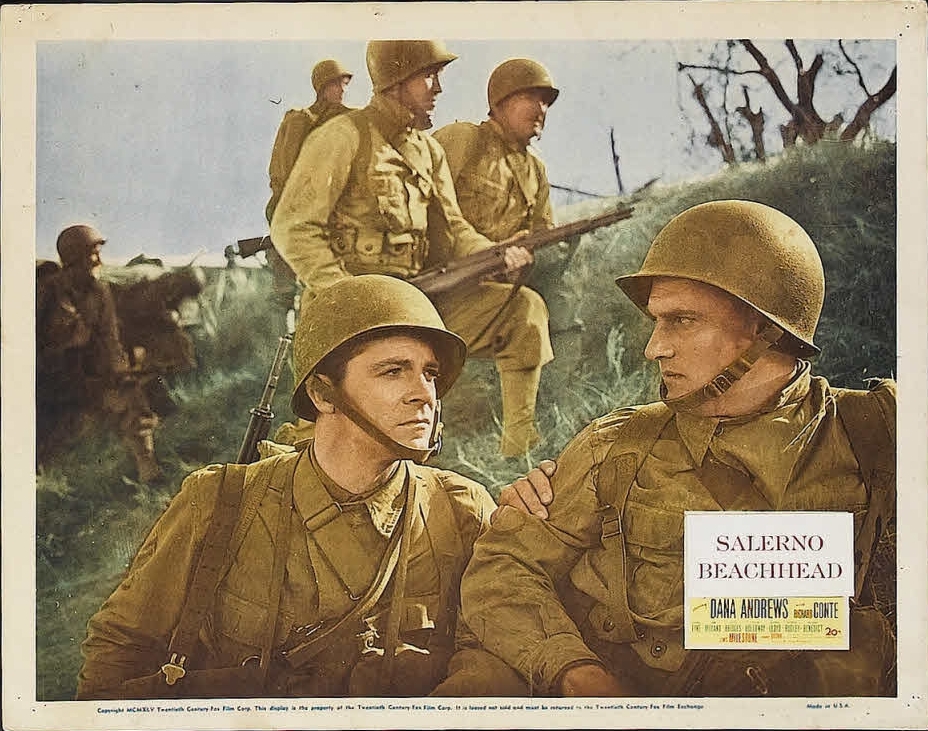
A Walk in the Sun (Fox, 1945) One of the best and most realistic U.S. combat movies made during the war is not openly propagandistic. (Others in this small fraternity include Sahara; The Story of G. I. Joe; Destination Tokyo;They Were Expendable; Objective, Burma!) Once more it’s Lewis Milestone in the director’s chair. Leaving the Salerno beachhead in Italy, a U.S. platoon is entailed with rousting Germans from an isolated farmhouse. Casualties inflicted by air and ground cause command to devolve onto Andrews’ Sergeant Tyne. War Movies called it “memorable” and gave special praise to Andrews and Richard Conte.
The Best Years of Our Lives (Samuel Goldwyn, 1946) The multi-Academy Award winning masterpiece from director William Wyler about returning veterans features Andrews as a Fred Derry, former bombardier, seeking something more than a soda jerk job and finding that his wife has been no paragon of virtue during his absence. Andrews is center stage in one of the great scenes in cinema history: walking dumbfounded through a bomber graveyard, a multitude of planes rolled straight from the factory to these broad fields outside Boone City. Destination: scrap heap.
Canyon Passage (Universal/Walter Wanger Productions, 1947) Relatively unsung and rather unique Technicolor western was filmed on location in the Pacific Northwest where settlers try to co-exist peacefully with the indigenous tribe. The fly in the ointment is the brutish Honey Bragg (Ward Bond), who kills a female tribe member, inciting a war. (The late radio DJ and movie maven Ken Garland said that if you are asked to name a character actor in a particular old movie and must guess, guess Ward Bond.) Andrews plays a freight transporter and Bragg’s nemesis. Susan Hayward’s flaming red hair vies with the scenery for accolades. “Dana Andrews’ work may be the best of his career, as the steady-nerved, pipe-smoking Logan Stuart,” wrote Brian Garfield in Western Films: A Complete Guide.
Boomerang (Fox, 1947) Director Elia Kazan’s third film—before classics likeGentleman’s Agreement, A Streetcar Named Desire, On the Waterfrontand Viva Zapata—was termed a “docu-noir” by film historians Alain Silver and James Ursini, whose commentary on the DVD is exceptional. Based on the real-life murder of a clergyman in a Connecticut town, vagrant John Waldron (Arthur Kennedy) is given short shrift by the legal establishment and townsfolk until State’s Attorney Henry Harvey (Andrews) realizes that the so-called evidence is shaky at best and dismisses charges.
My Foolish Heart (Samuel Goldwyn/RKO, 1949) The accidental demise of her new beau, Walt Dreiser (Andrews) leaves Eloise Winters (Susan Hayward) with an unexpected child, no husband and the potential for ostracism. Based on J. D. Salinger’s “Uncle Wiggly in Connecticut,” this film version was hated by the author, but it’s an affecting tearjerker with one of composer Victor Young’s greatest tunes. Andrews makes the most of his screen time.
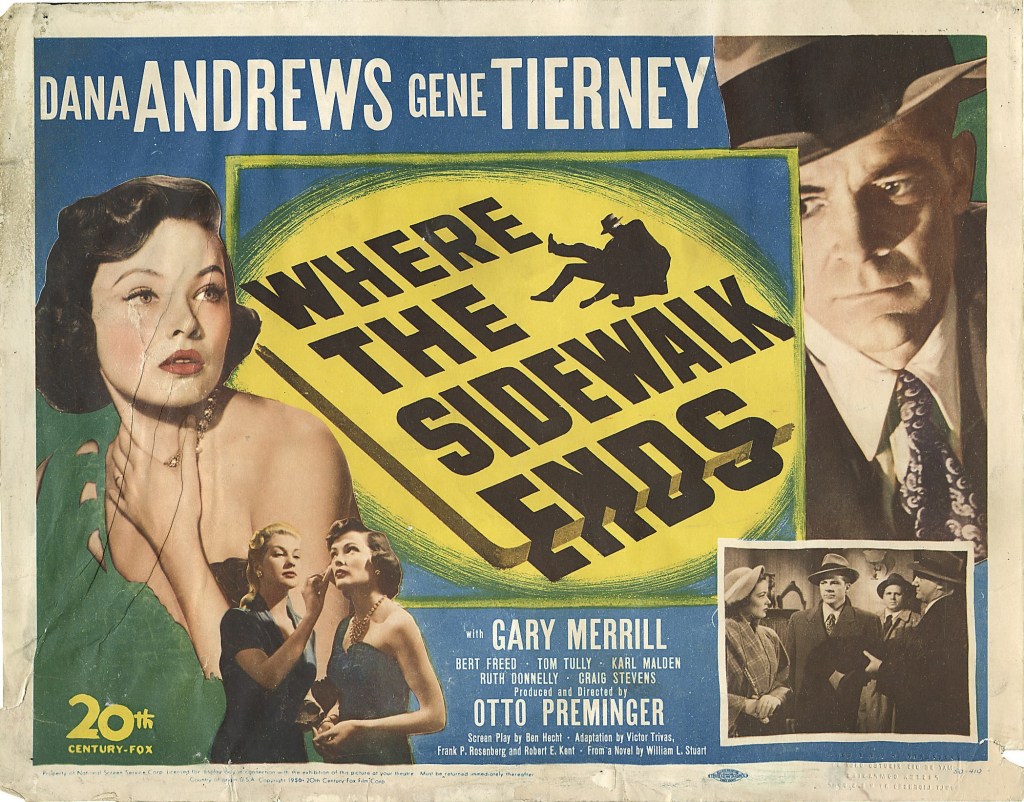
Where the Sidewalk Ends (Fox, 1950) A well-regarded (“dialogue is consistently pungent,” said The New York Times Guide to Movies on TV), Otto Preminger-directed noir features Andrews as detective Mark Dixon, so angry his father was a hood that he metes out his own justice on the criminals with whom he comes into contact. Ironically, he accidentally kills a miscreant and decides to lay the blame on mob boss Tommy Scalise (Gary Merrill). It’s a recipe for personal disaster.
Night of the Demon (aka Curse of the Demon; Columbia, 1957) Scoring 100% on Rotten Tomatoes, this terror tale is based on M.R. James’ classic 1911 short story, “Casting the Runes.” Arriving in England to participate in a parapsychology conference, the skeptical Dr. John Holden (Andrews) finds himself confronting the seemingly benign Dr. Julian Karswell (Niall MacGinnis), unaware that the man is a satanist capable of summoning a noxious demon whose horrific mission of murder cannot be thwarted once the spell is cast. Incredibly unsettling horror from Jacques Tourneur, a master of all genres (I Walked with a Zombie, Cat People,Out of the Past, The Flame and theArrow) who’d directed Andrews in Canyon Passage. You will see the demon, which irked some critics, but the most perspicacious realized that not showing it would provide no fun at all.
Been watching K-Dramas for years and want to meet new K-Drama lovers? Love BTS but don’t know much about Korean television? Break out the kimchi and join us to watch an episode of one the hottest Korean shows, then pop onto a Zoom call to chat about the show, the newest Korean music, and Korean culture – all from the comfort of our own homes.
On February 13, from 3:00pm – 5:00pm, we will be watching the pilot episode of “W: Two Worlds.” “W: Two Worlds” tells the story of the clash between two worlds – the “real” world and a parallel universe set within a webtoon. Kang Chul, main character of the webtoon, is a self-made millionaire with a tragic past. Oh Yeon-joo is a cardiothoracic surgeon resident and daughter of the webtoon’s illustrator. When her father goes mysteriously missing, she goes looking for him at his office and gets dragged into the world of the webtoon just in time to save Kang Chul’s life. Part thriller, part romance, part urban fantasy, this is a great drama for celebrating this year’s palindrome date, Twosday, as well as Valentine’s Day.
Ages 16+
Registration is required to receive the Zoom link and viewing instructions. Register on the event calendar here.
For questions, please email us at: ccljtc@ccls.org.
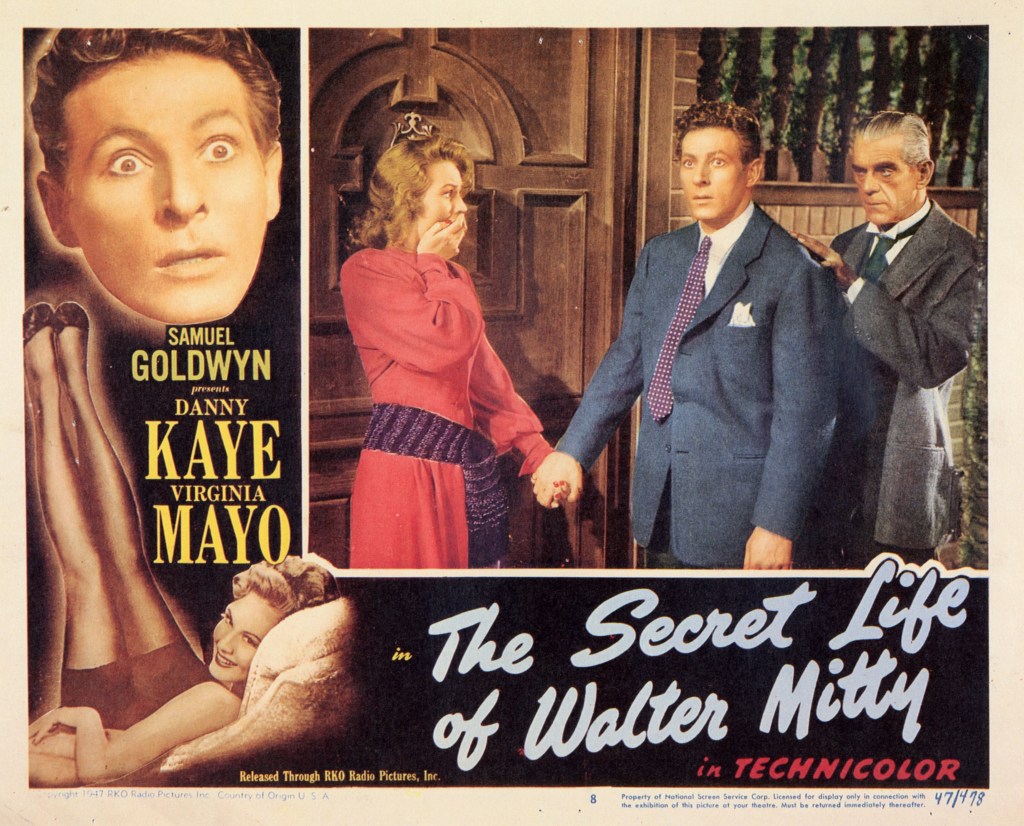
Until I revisited The Secret Life of Walter Mitty (1947) a few years ago, I did not realize that my memory regarding the locale for this movie was faulty. I recalled Danny Kaye bopping along the streets of New York City in sunny, broad daylight amongst a bustling throng of equally jaunty New Yorkers. It was uplifting, suggestive of prosperity and optimism. The U.S., after all, was one of the few belligerents to come out of World War II with its terrain and cities intact. It had been the “arsenal of democracy” and reaped the benefits of victory. However, my recollection that Mittywas filmed on the actual streets of New York was in error. Except for some long shots of Times Square and various avenues, it was obviously not. For instance, when Kaye exits a taxi and leaves his multi-film costar Virginia Mayo behind, the action takes place against a studio backdrop. (I wonder if my recollection of a decades’ old Peter O’Toole TV interview is also in error? I’d like to think he did tell the host that when he came to New York after the war he was astounded that he could buy a hotdog on every street corner. No such delicacies could be had by Londoners.)
There was indeed postwar on-location filming in New York City by major Hollywood studios: crime movies. Unlike Mitty, whose main through story is actually of a criminal mien involving Dutch crown jewels hidden from the Nazis and now in the U.S., these films were most definitely not cheery. Nor were they in color. However, much of the filming was done on location.
Made during the war but released shortly thereafter, The House on 92nd Streetdetailed the efforts of the Federal Bureau of Investigation to break a German spy ring. According to The Hollywood Professionals, actual footage of espionage agents was supplied by the FBI: “material which had been secretly filmed by their own agents, and that had been top secret information during the War.” FBI chief J. Edgar Hoover was enlisted to provide verisimilitude.
Housewas not only noir, but perhaps the first “police procedural,” a crime movie filmed in semi-documentary fashion and based on real cases “torn from the headlines!” Often there was a narrator, like an actor with an authoritative voice such as Reed Hadley. Audiences became privy to FBI labs and all the methods our crime fighters employed to bring to justice veterans unable to adjust to peacetime and used to killing in the biggest criminal activity of all, war. (As late as 1968 reviewers commented not only on Bullitt‘s now iconic car chase sequence, but the fascinating look behind the scenes of crime-solving, as in Steve McQueen’s detective hanging out in the San Francisco city morgue to confer with a doctor, and the use of telecopiers to solicit passport applications from Chicago almost in the blink of an eye.)
Looking back, one sees that daytime filming was necessary to show monumental government buildings wherein law enforcement worked tirelessly to stymie gangsters and racketeers, Nazis, and as time went by, Commie spies. (Terry Moore’s hash-slinger in 1955’s Shack Out on 101 exemplified this mindset in a barely disguised piece of propaganda or, if you will, hokum: “Just you wait until I pass that examination. Instead of coming to see me in this broken-down beanery, you’ll, you’ll walk into a great big beautiful government building, and I’ll be sitting behind a big desk doing….”)
According to The Film Noir Encyclopedia, many of the actors in The House on 92nd Street were nonprofessionals. Some were true blue FBI personnel. The director was Hollywood veteran Henry Hathaway. Audiences would see his handiwork again.
The same year as Walter Mitty but very much on the opposite side of the coin was Kiss of Death, the famous noir starring Victor Mature and in his film debut, Richard Widmark as the psychopathic Tommy Udo, who pushes the wheelchair-bound Mildred Dunnock down the stairs. As he had done with TheHouse on 92nd Street, director Henry Hathaway did much on-location shooting. Oddly, according to The Film Noir Encyclopedia, cinematographer Norbert Brodine made “a row house in Queens look like a soundstage set.” Other locations included the Sing Sing Correctional Facility (formerly Ossining Correctional Facility) and the Tombs (Manhattan Detention Complex).
In The Hollywood Professionals: Producer Louis De Rochemont used the director’s on-location work experience to convince 20th Century-Fox’s studio head Darryl Zanuck that “semi-documentary crime films would be perfect for postwar audiences because of the factual or apparently factual basis of the material created with the assistance of official bodies such as the Federal Bureau of Investigation.”
Hathaway acknowledged crowd control as a drawback. Spectators had the habit of mingling with actors. Incidental secondary noises like dogs barking or shouting children had to be ignored. A big problem was transportation via six large equipment trucks shuttling between 76 sets.
The Naked City
Most famous for on-location shooting in NYC in this period wasThe Naked City (1948). This truly exemplified the police procedural. Said The Film Noir Encyclopedia: “The real star of the film becomes the city, which can take on a variety of personalities. It is truly a mysterious entity imbued with all sorts of stories and affectations. The Naked City is unlike most of [director Jules] Dassin’s other films, as it is a vision of the world that forsakes subtlety and deals almost exclusively with black and white absolute truths.”
To sum up, to my chagrin the close-ups and medium shots in The Secret Life of Walter Mitty were not, as I’d misremembered, filmed in the skyscrapers and deli’s and on the streets of New York City. The comic potential inherent in on-location urban shooting was there but a longer gestation period was needed before it flowered. The good news was that the exploration of postwar on-location filming in NYC identified some very influential crime films: The House on 92nd Street, Kiss of Death, and The Naked City.
By Kim
References
Canham, Kingsley. The Hollywood Professionals: Volume 1: Michael Curtiz, Raoul Walsh, Henry Hathaway. 1973. Includes quotes on Kiss of Death from publicity handout.
Ursini, James, and Ward, Elizabeth. The Film Noir Encyclopedia. rev. ed. 1992.
Any cinephile will scoff at designating Fredric March an “alternate super star.” After all, he won two Academy Awards for Best Actor and was ranked the equal of his unofficial rival, Spencer Tracy, who also won two Oscars. Both had the chance to spar with one another inInherit the Wind (1960). However, because there is no The Films of Fredric March, I summarize his sterling career here.
Inherit the Wind
March was born in Racine, Wisconsin and attended the University of Wisconsin-Madison. During World War I he was an artillery lieutenant in the army. After the war he became a banker but by 1920 was a movie “extra” in New York City-based films. This was followed by a contract with Paramount Pictures.
March won his first Best Actor Academy Award for director Rouben Mamoulian’s Dr. Jekyll and Mr. Hyde (1932). In Hollywood in the Thirties, author John Baxter wrote, “Mamoulian’s inventions for the scenes showing Fredric March’s change from Jekyll to Hyde would alone have made this film memorable. Determined to engineer the transformations without resorting to cuts or opticals, Mamoulian conceived on the spur of the moment a system in which specially toned makeup, coloured lights and coloured filters were used to change the look of March’s face.” There was more to it than that. Makeup turned him into a veritable ape-man in tux and cape.
In the following year’s World War I film, The Eagle and the Hawk, March gave another superb performance. According to Thomas Doherty in Projections of War, March was “extraordinary…as the burnt-out pilot (with what was not then called the thousand-yard stare).”
Death Takes a Holiday
Like Cary Grant, March never tied himself to a long-term studio contract, which necessitated taking any role you were given or else be suspended. Also like Grant, he was adept at screwball comedy and successfully traded bon mots with Carole Lombard in Nothing Sacred (1937). Nor did he seem out of place in historical epics, playing Marcus Superbus (!) in The Sign of the Cross (1932). Fantasy was also up his alley, and he played the title character in the still amusing Death Takes aHoliday (1934). He did very well in large-scale films based on huge historical novels. Think Garbo’s Anna Karenina (1935), as Jean Valjean in the estimable 1935 production of Les Miserables, and Anthony Adverse (1936). He was the doomed Norman Maine opposite Janet Gaynor in the first version ofAStar is Born (1937). High-octane films were inter-mixed with prestigious stage roles in The Skinof Our Teeth, Long Day’s Journey Into Night, and An Enemy of the People.
Les Miserables
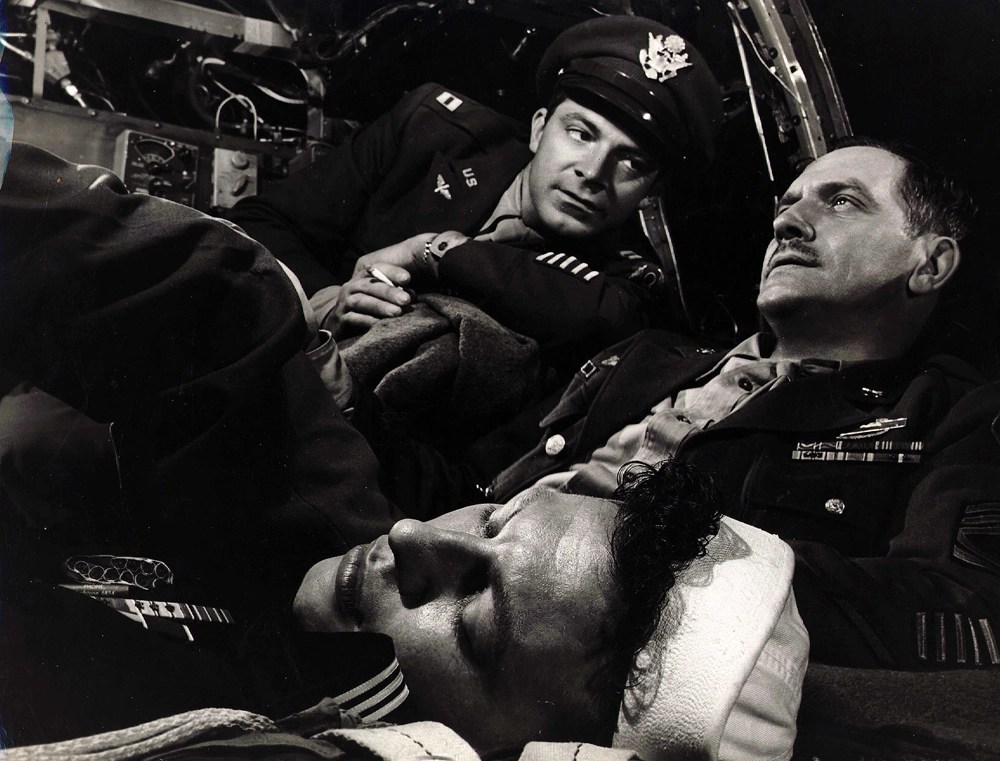
In 1946 he was the lead in The Best Years of Our Lives, the Best Picture Academy Award winner for which he won his second Oscar. A movie that never fails to touch viewers’ heartstrings, especially those who participated in World War II or whose parents did, 1001 Movies You Must See Before You Die called it “one of the best American movies about returning soldiers ever made—certainly the most moving and deeply felt. It bears witness to its times and contemporaries like few other Hollywood features, and Gregg Toland’s deep-focus cinematography is incredible.” The Essentials called it “A deeply beloved American film from the moment it opened in December 1946, The Best Years of Our Lives spoke to a generation affected by World War II on the battlefield and on the home front.”
The Best Years of Our Lives
In the 1950s March played his age: Willy Loman in the 1951 film version of Death of a Salesman, furniture manufacturer controller in Executive Suite (1954), admiral in The Bridges at Toko-Ri (1954), television network president in The Man in the Gray Flannel Suit (1956), widowed clothing manufacturer conducting an affair with a young receptionist (Kim Novak) in Middle of the Night (1959).
Like Henry Fonda, in the 1960s March had the maturity and gravitas to play the President of the U.S. Curiously, both had that opportunity in 1964: Fonda in Fail-Safe, March in Seven Days in May.
To summarize, Fredric March’s career was second to none. He chose his roles wisely and deserves to be ranked among the “great stars.”
By Kim
References
Arnold, Jeremy. The Essentials: 52 Must-See Movies and Why They Matter. 2016.
Baxter, John. Hollywood in the Thirties. 1970, c1968.
Doherty, Thomas. Projections of War: Hollywood, American Culture, and World War II. 1993.
Been watching K-Dramas for years and want to meet new K-Drama lovers? Love BTS but don’t know much about Korean television? Break out the kimchi and join us to watch an episode of one the hottest Korean shows, then pop onto a Zoom call to chat about the show, the newest Korean music, and Korean culture – all from the comfort of our own homes.
On December 12, from 3:00pm – 5:00pm, we will be watching the pilot episode of “Weightlifting Fairy Kim Bok-joo.” If you like rom-coms with a good “childhood friends to lovers” trope, this might be the drama for you! This coming-of-age series follows the trials and mishaps of a group of college athletes as they follow their dreams and fall in love along the way. Join us for a fun, fluffy, feel-good drama for the holiday season.
Ages 16+
Registration is required to receive the Zoom link and viewing instructions. Register on the event calendar here.
For questions, please email us at: ccljtc@ccls.org.






















 Stay Connected with Chescolibraries