One of the most exciting “plot devices” in movies is the agglomeration of a select team that embarks on a hazardous mission whose members generally expect to return in one piece. Until the 1960s this phenomenon was rare. The films in question cross genres. Not included here are heist films (that began in earnest in 1950 with The Asphalt Jungle and Armored Car Robbery), which can be construed as a subgenre of film noir which itself is a subgenre of Crime, Mystery and Suspense. Nor are superhero outings examined. The Avengers, for instance, are always on hazardous missions, their skills well-known in advance.
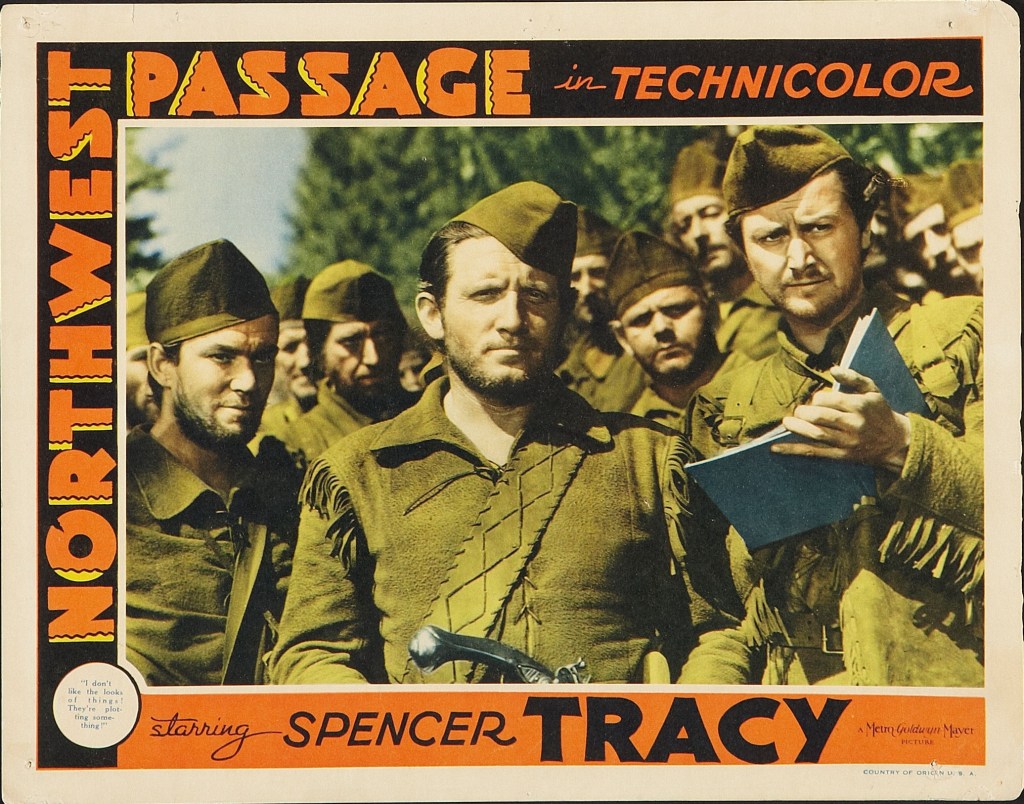
Perhaps the first example of the “single mission” team adventure is Northwest Passage (1940). During the French and Indian War, Major Robert Rogers (Spencer Tracy) leads his wilderness savvy Rangers through the Maine wilderness and into Canada to destroy the St. Francis Indian encampment from which marauders have been despoiling Colonial homesteads. The specialty of Langdon Towne (Robert Young) is map-making. The mission accomplished, the Rangers split up to avoid capture by surviving tribesmen and French regulars. (A “hidden” remake is 1945’s Objective, Burma! One of the best combat movies made during World War II features Errol Flynn as leader of parachutists who land behind Japanese lines, blow up a radar station, and try to escape with minimal casualties. As in Northwest Passage, the soldiers disperse during their return to Allied lines and half of them perish.)
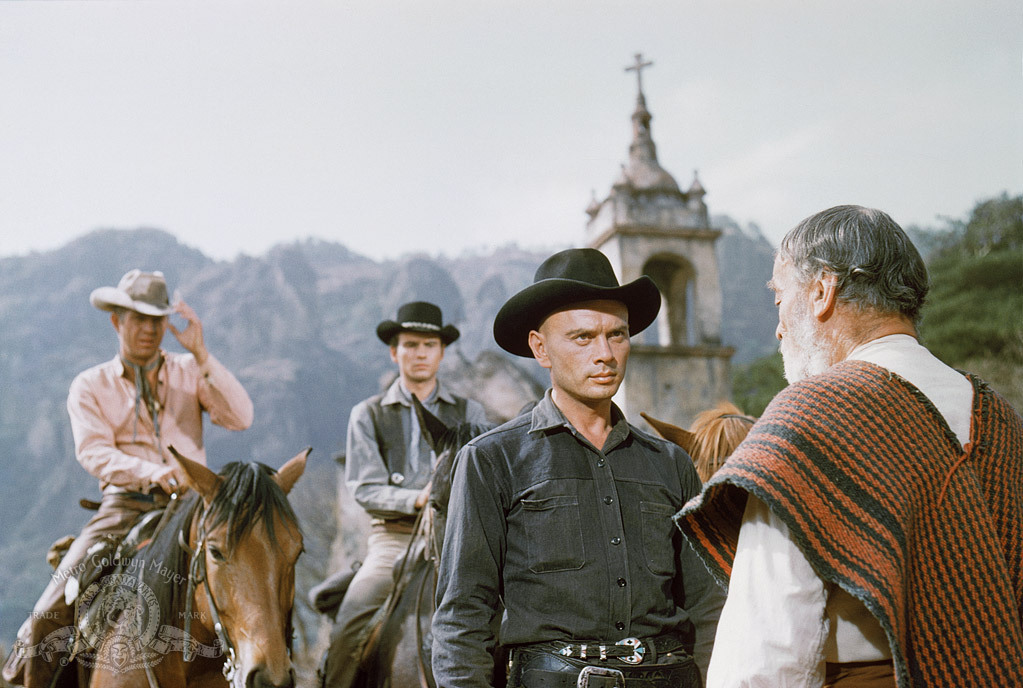
A lengthy gap for this trope ensues but returns with a vengeance in 1960 with The Magnificent Seven, which was inspired by Japanese director Akira Kurosawa’s classic Seven Samurai(1954). Poor Mexican villagers hire American gunslingers to protect them from the imminent arrival of Calvera (Eli Wallach) and his numerous bandidos. Chris (Yul Brynner) convinces six other gunmen down on their luck to join him and stop Calvera’s depredations. Most do not survive. (There are two sequels of lesser worth, Guns of theMagnificent Seven, 1969, and The Magnificent Seven Ride, 1972. A major remake appeared in 2016, and as has become typical, adds high explosives plus a Gatling gun to cause carnage.)
Following on the heels of Magnificent Sevencame The Guns of Navarone (1961), a monster hit and Academy Award nominee for Best Picture. (West Side Story was the winner that year.) After Major Franklin (Anthony Quayle) is injured, the small group of British commandos and Greeks are led by Captain Keith Mallory (Gregory Peck), expert mountaineer who helps them scale forbidding cliffs on their way to destroy two gigantic German guns preventing approach by ships tasked with rescuing British forces on the island of Kheros. Taking a cue from Magnificent Seven’s knife-wielding expert played by James Coburn, Stanley Baker is the blade virtuoso. David Niven’s forte is explosives. (Force 10 from Navarone was a 1978 sequel. Peck and Niven teamed for a somewhat similar mission in 1980’s The Sea Wolves, with a German ship targeted for destruction.)
The Secret Invasion (1964) was a low-budget but entertaining harbinger as the plot is eerily similar to both The Dirty Dozen (1967) and Where Eagles Dare (1968). Stewart Granger leads convicts with special skills (forgery, murder, explosives) into Yugoslavia during World War II to rescue from German captivity an Italian general sympathetic to the Allied cause.
Another large and hugely enjoyable western used the team approach in 1966’s aptly titled The Professionals. Lee Marvin leads a quartet into Mexico to rescue Maria (Claudia Cardinale), wife of rancher J. W. Grant (Ralph Bellamy). Maria has been ostensibly kidnapped by Jesus Raza (Jack Palance). Burt Lancaster plays the demolition expert. Robert Ryan is master of equines. Woody Strode is a scout and archer who facilitates explosives ignition. On the strength of his Academy Award-winning dual role in 1965’s Cat Ballou and National Board of Review win for the same year’s Ship of Fools, Marvin was now far from his apprenticeship as the fifties’ and early sixties’ greatest screen villain (Bad Day at Black Rock, The Big Heat,The Wild One, Violent Saturday, Seven Men from Now, The Comancheros, The Man Who Shot Liberty Valance).
Like The Professionals, The Dirty Dozen (1967) are trained and led by Major Reisman (Lee Marvin), training a diverse but highly dangerous group of army convicts whose mission is to parachute into France before D-Day and blow up a chateau full of German officers. This they do but like The Magnificent Seven, only a few survive. (The Devil’s Brigade, 1968, seems unashamedly beholden to The Dirty Dozen but was released not long after the 1967 movie and was based on a 1966 book.)
Where Eagles Dare (1968, U.K.). Ubiquitous today on TV, this high-powered WW II saga (like The Guns of Navarone, from writer Alastair MacLean) stars Richard Burton and Clint Eastwood. The latter, after his “spaghetti western” trilogy, plus Hang ‘Em High and Coogan’s Bluff(both 1968)was on the cusp of superstardom. As Lt. Schaffer, a sometimes demolition expert, he and Major Smith (Burton) infiltrate a German castle holding an Allied general with secrets to the forthcoming D-Day invasion. One could argue this is not much of a team, but they are assisted by Mary Ure and Ingrid Pitt, who facilitate ingress and egress from the eyrie and make their escape with the men. (Although she caused the screaming, in 1970 Pitt would claim title as Hammer Films’ signature scream queen in The Vampire Lovers.)
Predator (1987). Major “Dutch” Schaffer (Arnold Schwarzenegger) and an elite extraction team enter the Central American jungle to rescue a cabinet minister held by insurgents. Unknown to them, a space alien hunter lurks in the forest canopy and is soon picking off the humans and taking trophies. At first glance the team members might seem like ordinary mercenaries but as the story progresses we see Blain (Jesse Ventura) operating a monstrous hand-held minigun that can sever small tree trunks and the scout Billy (Sonny Landham) choosing to confront the predator with a machete. Richard Chaves plays a demolition man.
The Lord of the Rings: The Fellowship of the Ring (2001). The wizard Gandalf the Grey visits Hobbiton to inform young Frodo that he has a highly dangerous mission to perform with the fate of Middle Earth hanging in the balance: return the “One Ring” to the volcanic pit of Mount Doom, thus foiling the evil Sauron’s quest for ultimate power. Accompanying Frodo are three friends, a “Ranger,” an axe-wielding dwarf, an expert Elf archer, and the Gondor warrior Boromir. Frodo’s perilous adventure continues in The Two Towers (2002) and The Return of the King (2003).
The League of Extraordinary Gentlemen (2003). Retired adventurer Allan Quatermain (Sean Connery) leads a coterie of disparate entities against the “Fantom,” aka “M” and “Moriarty” (Richard Roxburgh), one-time nemesis of Sherlock Holmes now bent on starting a world war. Quatermain’s crew includes the ageless Dorian Gray, Captain Nemo, Henry Jekyll/Edward Hyde, Mina Harker and Tom Sawyer. The film made a bit of money despite being roundly criticized as an incoherent mishmash.
Inception(2010) Leonardo DiCaprio is a thief enlisted to form a team, invade an industrialist’s subconscious, and convince him to dissolve a company. That’s the short synopsis of this heady science fiction action adventure, a sort of futuristic “magnificent seven.”
Films that some might include in this survey but I did not are The Wild Geese (1978; aging, no longer elite mercenaries), Aliens (1986; overconfident squad of Marines), Saving Private Ryan (1998; regular soldiers undertaking rescue mission). An outlier that could be construed as a Single Mission Player is the French classic of 1953, The Wages of Fear. Four down-and-out men of disparate backgrounds marooned in South America drive—carefully—two trucks loaded with nitroglycerine to a distant oil well that is aflame and must be capped. (Director William Friedkin’s 1977 movie Sorcerer is an unacknowledged remake.)
Been watching K-Dramas for years and want to meet new K-Drama lovers? Love BTS but don’t know much about Korean television? Break out the kimchi and join us to watch an episode of one the hottest Korean shows, then pop onto a Zoom call to chat about the show, the newest Korean music, and Korean culture – all from the comfort of our own homes.
On March 13, from 3:00pm – 5:00pm, we will be watching the pilot episode of “Tale of the Nine-Tailed.” Lee Yeon, a nine-tailed fox with the ability to transform into a human form, spends his days eliminating dangerous supernatural beings while also searching for the reincarnation of his lost love. Nam Ji-ah, a television producer, works on a show that searches for proof of the existence of supernatural beings. When Lee Yeon’s unsavory half-brother takes an interest in Nam Ji-ah, Ji-ah might just get that proof she needs – plus so much more than she bargained for.
Ages 16+
Registration is required to receive the Zoom link and viewing instructions. Register on the event calendar here.
For questions, please email us at: ccljtc@ccls.org.
Carver Dana Andrews was one of 13 children born on a Mississippi farm in 1909. (Actor Steve Forrest was his brother.) In 1931 he tried his hand at singing in Los Angeles. His film career began when given a contract with Samuel Goldwyn Productions but he became more of a fixture at 20th Century-Fox. He was versatile, playing detectives, westerners, soldiers and sailors. He came in for some small praise in David Shipman’s The Great Movie Stars: The International Years: “…he never got in anybody’s way, his sober-citizen appearance made its own mild contribution to the texture of the films in which he appeared. He projected a certain authority, grave-faced and grave-voiced, a certain masculine concern and an air of restrained heroism—all qualities used well in his two best films, The Ox-Bow Incident and A Walk in the Sun.” (At least Andrews made the book. Shipman was often unusually harsh in his examination of many actors’ careers. In his short analysis of Andrews in The Best Years of Our Lives, he said he was “good” under director William Wyler but that his co-star, Virginia Mayo, soon to be a frequent Danny Kaye partner, as Andrews’ trampish spouse, gave “her one good screen portrayal….”—despite dozens of star outings!) In The Hollywood Story, Joel Finler ranked Andrews an “important star” in his 20th Century-Fox star pantheon chart.
Andrews rose through the ranks and early on, as Shipman observed, received his best early notices as a lynching victim in 20th Century-Fox’sThe Ox-Bow Incident (1943) with Henry Fonda in the lead. Back at Goldwyn that same year, he was directed by Lewis Milestone, heralded helmsman of All Quiet on the Western Front (1930) and frequent future combat films, includingThe North Star, a propaganda film extolling Ukrainian resistance to the German invasion of the Soviet Union. Andrews was in that, too, as well as Milestone’s The Purple Heart (1944).
Then came Laura (1944), one of the most universally praised noir films.
Eddie Muller, host of TCM’s series Noir Alley, considers Andrews the finest exemplar of the ubiquitous fedora worn by cops and hoods alike.
Andrews never stopped acting, in film and on stage. He was a fixture as military officers in the 1960s. See The Satan Bug (1965), In Harm’s Way (1965), Battle of the Bulge (1965), and The Devil’s Brigade (1967). Andrews was dogged by alcoholism for many years but finally licked it and spoke on behalf of the National Council of Alcoholism in 1976. Andrews died in 1992 at age 83.
Dana Andrews’ Most Significant Movies
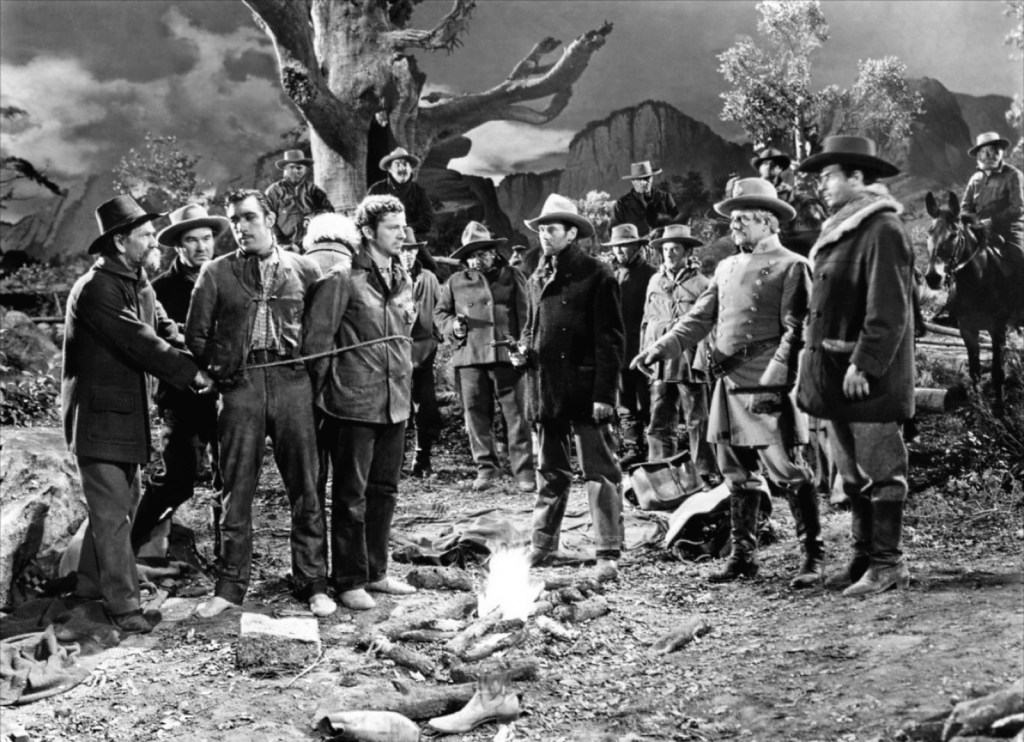
The Ox-Bow Incident(20th Century-Fox, 1943) A vigilante posse rounds up three men (Andrews, Anthony Quinn, Harry Morgan) they think are cattle rustlers. The well-taken arguments against a lynching by Gil (Henry Fonda, who himself witnessed mob violence and the ensuing lynching of an African-American in Omaha in 1919) are disregarded.
The Purple Heart (20th Century-Fox, 1944) Downed U.S. airmen are put on trial by the Japanese. It’s a “kangaroo court” and they are tortured and scheduled for execution. Andrews is the officer in charge of the prisoners.
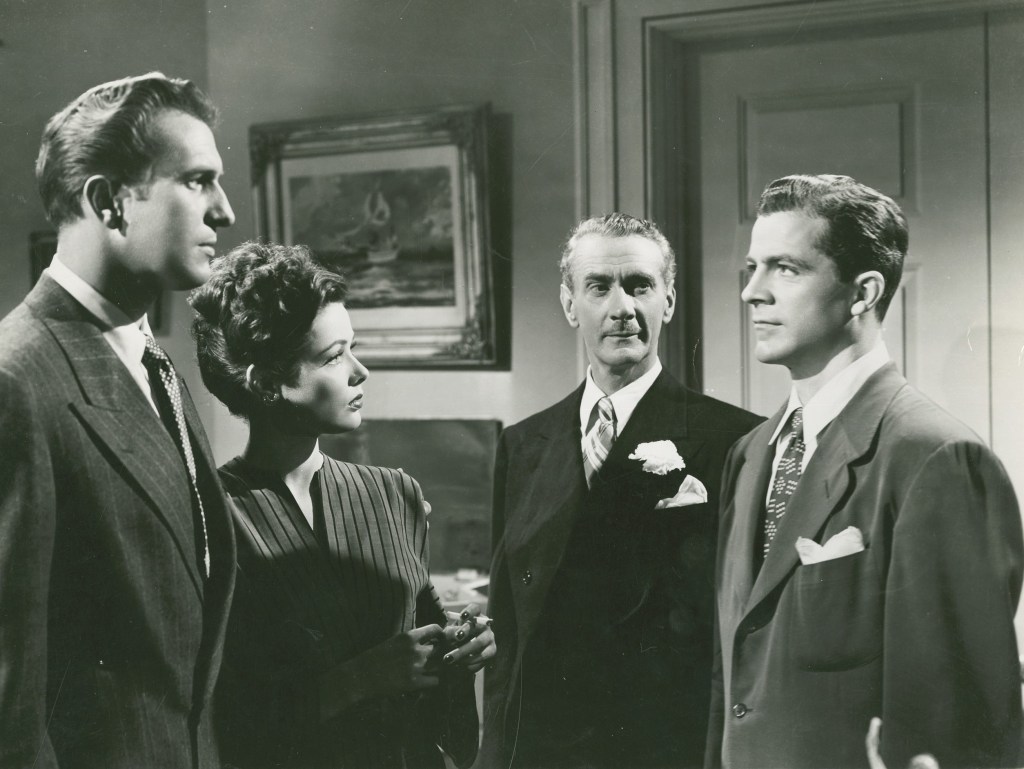
Laura(20th Century Fox, 1944) In probably one of the top six of the crime subgenre known as “film noir,” Andrews begins his era as a fedora-wearing detective, here investigating the presumed murder of the beautiful Laura (Gene Tierney), whose portrait haunts him. The Los Angeles Times reviewer was much impressed by individual scenes: “There is one that is outstandingly enacted by Andrews, while he is alone in the apartment of the murdered woman. A portrait hanging on the wall reveals the magic that she exerts and is a symbol of this spell. It is action carried out without a single word being spoken, yet it is remarkably compelling. The audience at the Fox Wilshire last night quite evidently fell under the hypnotic influence of the scene, for under ordinary circumstances it would have appeared too protracted. But its force was fully conveyed.” The Film Noir Encyclopedia extolled Andrews’ performance: “Overshadowed by Clifton Webb’s marvelously idiosyncratic performance as Lydecker, Andrews’ quieter portrayal deserves more attention. With his haunted eyes, taut yet sensitive mouth, and softly insinuating voice, Andrews is a highly evocative screen presence, conveying more with a look than many actors do with a soliloquy. As the pragmatic, unromantic cop who, when asked by Lydecker if he’s ever been in love, replies, ‘A doll in Washington Heights got a fox fur out of me once,’ he is only able to love the perfumed ghost of a woman he believes is dead, and who becomes a dream expressed in a work of art.”
State Fair(Fox, 1945) Andrews could sing a little, but the studio forgot and he was dubbed. Wearing a straw fedora, he squires Jeanne Crain around the Iowa State Fair in this famous piece of Americana featuring two Rodgers and Hammerstein songs that became standards: “It’s a Grand Night for Singing” and “It Might As Well Be Spring.”
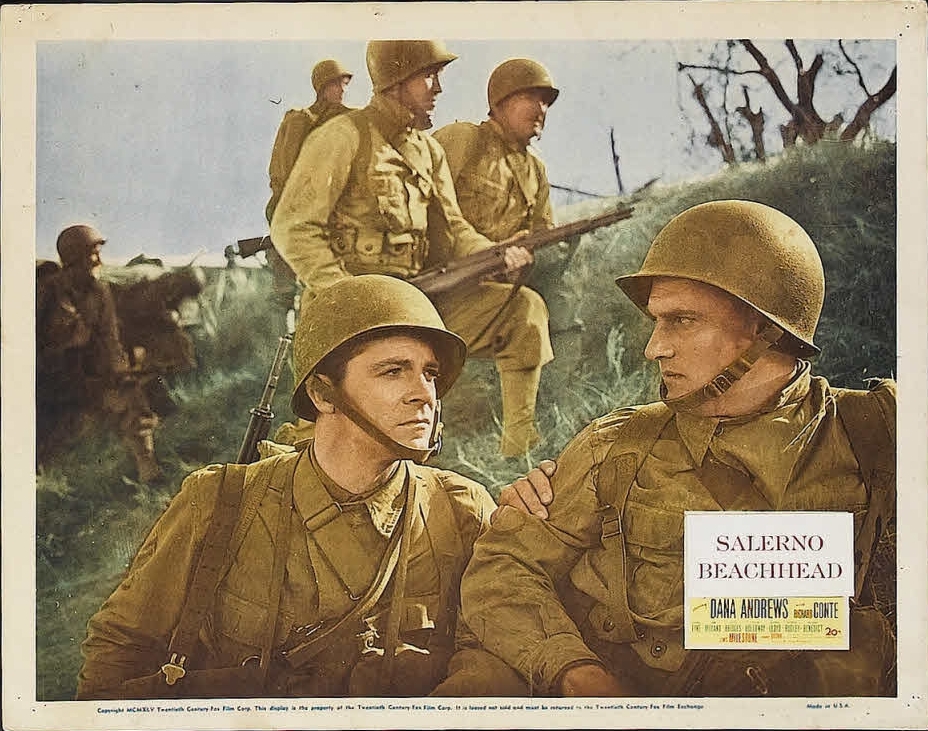
A Walk in the Sun (Fox, 1945) One of the best and most realistic U.S. combat movies made during the war is not openly propagandistic. (Others in this small fraternity include Sahara; The Story of G. I. Joe; Destination Tokyo;They Were Expendable; Objective, Burma!) Once more it’s Lewis Milestone in the director’s chair. Leaving the Salerno beachhead in Italy, a U.S. platoon is entailed with rousting Germans from an isolated farmhouse. Casualties inflicted by air and ground cause command to devolve onto Andrews’ Sergeant Tyne. War Movies called it “memorable” and gave special praise to Andrews and Richard Conte.
The Best Years of Our Lives (Samuel Goldwyn, 1946) The multi-Academy Award winning masterpiece from director William Wyler about returning veterans features Andrews as a Fred Derry, former bombardier, seeking something more than a soda jerk job and finding that his wife has been no paragon of virtue during his absence. Andrews is center stage in one of the great scenes in cinema history: walking dumbfounded through a bomber graveyard, a multitude of planes rolled straight from the factory to these broad fields outside Boone City. Destination: scrap heap.
Canyon Passage (Universal/Walter Wanger Productions, 1947) Relatively unsung and rather unique Technicolor western was filmed on location in the Pacific Northwest where settlers try to co-exist peacefully with the indigenous tribe. The fly in the ointment is the brutish Honey Bragg (Ward Bond), who kills a female tribe member, inciting a war. (The late radio DJ and movie maven Ken Garland said that if you are asked to name a character actor in a particular old movie and must guess, guess Ward Bond.) Andrews plays a freight transporter and Bragg’s nemesis. Susan Hayward’s flaming red hair vies with the scenery for accolades. “Dana Andrews’ work may be the best of his career, as the steady-nerved, pipe-smoking Logan Stuart,” wrote Brian Garfield in Western Films: A Complete Guide.
Boomerang (Fox, 1947) Director Elia Kazan’s third film—before classics likeGentleman’s Agreement, A Streetcar Named Desire, On the Waterfrontand Viva Zapata—was termed a “docu-noir” by film historians Alain Silver and James Ursini, whose commentary on the DVD is exceptional. Based on the real-life murder of a clergyman in a Connecticut town, vagrant John Waldron (Arthur Kennedy) is given short shrift by the legal establishment and townsfolk until State’s Attorney Henry Harvey (Andrews) realizes that the so-called evidence is shaky at best and dismisses charges.
My Foolish Heart (Samuel Goldwyn/RKO, 1949) The accidental demise of her new beau, Walt Dreiser (Andrews) leaves Eloise Winters (Susan Hayward) with an unexpected child, no husband and the potential for ostracism. Based on J. D. Salinger’s “Uncle Wiggly in Connecticut,” this film version was hated by the author, but it’s an affecting tearjerker with one of composer Victor Young’s greatest tunes. Andrews makes the most of his screen time.
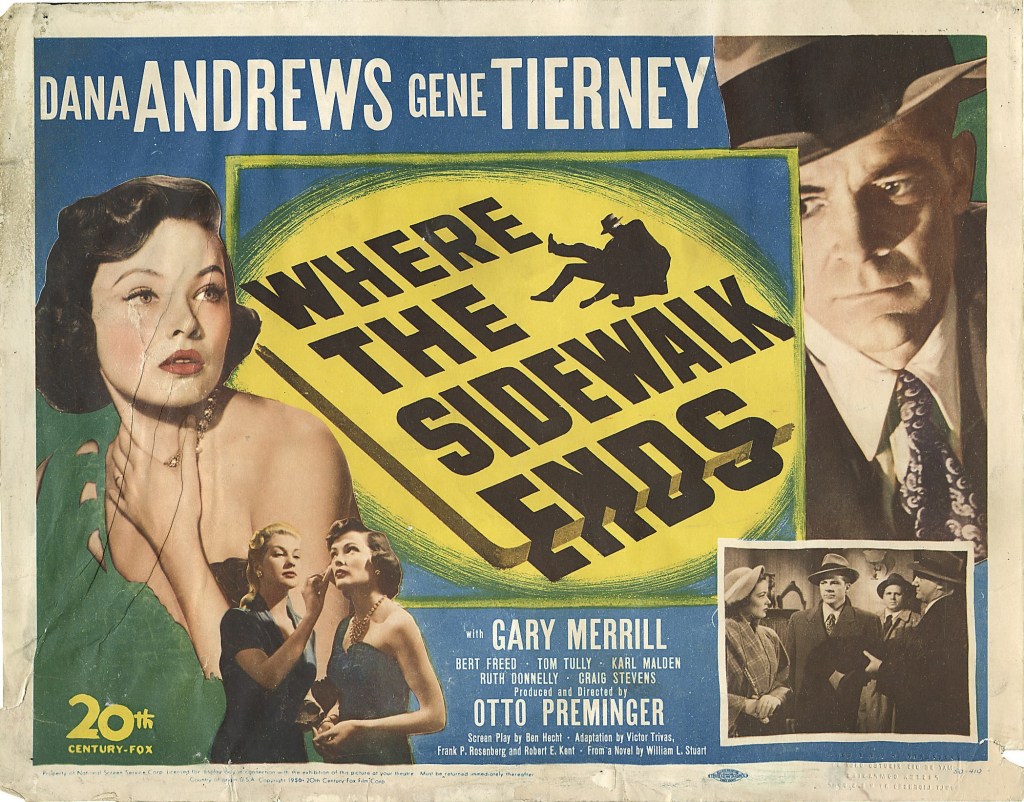
Where the Sidewalk Ends (Fox, 1950) A well-regarded (“dialogue is consistently pungent,” said The New York Times Guide to Movies on TV), Otto Preminger-directed noir features Andrews as detective Mark Dixon, so angry his father was a hood that he metes out his own justice on the criminals with whom he comes into contact. Ironically, he accidentally kills a miscreant and decides to lay the blame on mob boss Tommy Scalise (Gary Merrill). It’s a recipe for personal disaster.
Night of the Demon (aka Curse of the Demon; Columbia, 1957) Scoring 100% on Rotten Tomatoes, this terror tale is based on M.R. James’ classic 1911 short story, “Casting the Runes.” Arriving in England to participate in a parapsychology conference, the skeptical Dr. John Holden (Andrews) finds himself confronting the seemingly benign Dr. Julian Karswell (Niall MacGinnis), unaware that the man is a satanist capable of summoning a noxious demon whose horrific mission of murder cannot be thwarted once the spell is cast. Incredibly unsettling horror from Jacques Tourneur, a master of all genres (I Walked with a Zombie, Cat People,Out of the Past, The Flame and theArrow) who’d directed Andrews in Canyon Passage. You will see the demon, which irked some critics, but the most perspicacious realized that not showing it would provide no fun at all.