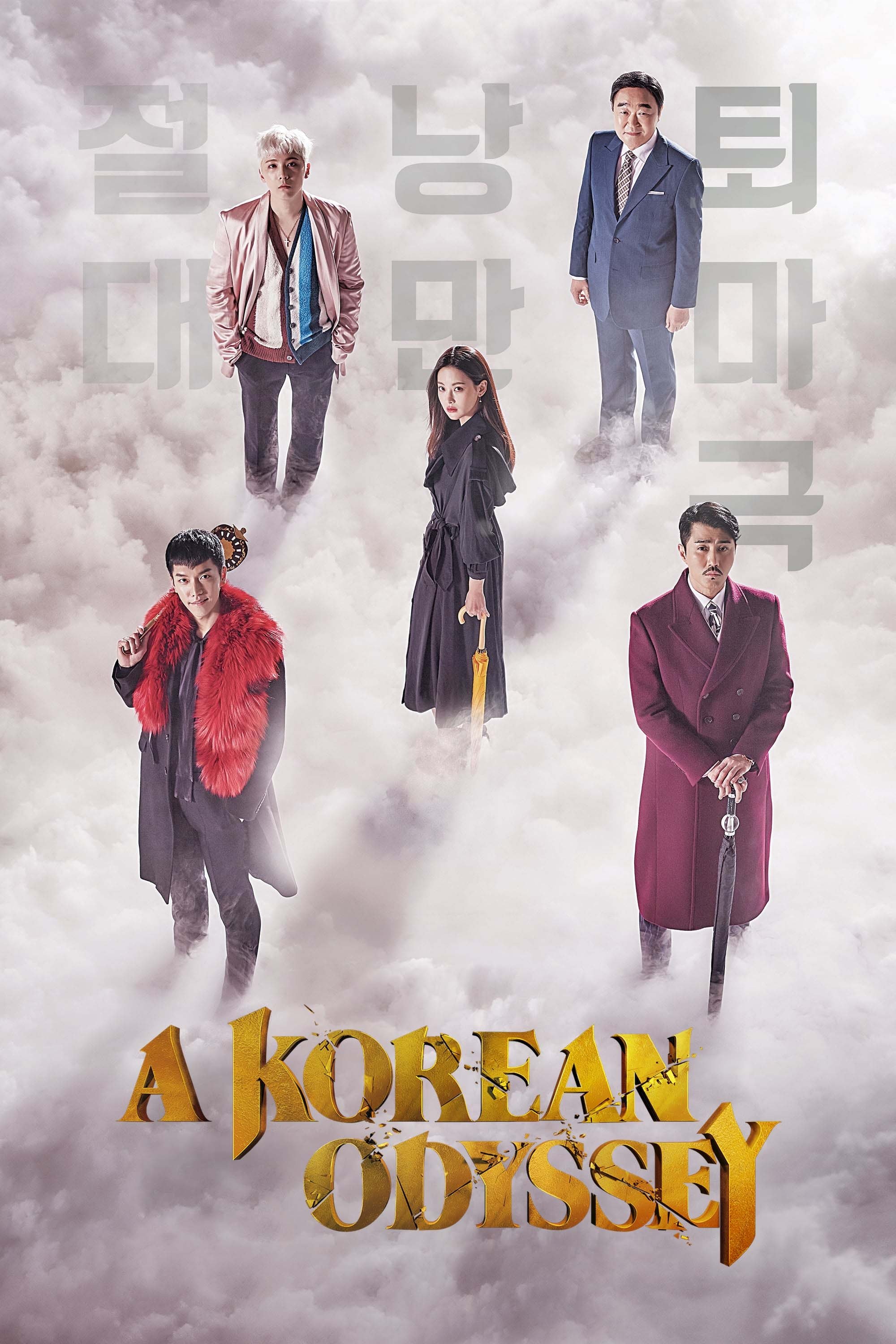
Join us on Monday, October 26 at 2:00pm on Facebook Live to guess what we’re printing on the 3D printer. Leave your guesses in the comments of the live stream, and the first person to guess correctly will win both the item and a gift card. Pick up your prizes by Halloween at the Jacobs Technology Center, located on the 2nd floor of the library.
Hints: The print is Halloween themed and will take around 30 minutes to fully print.
Need a new hobby to keep your spirits up while we’re all social distancing? Been watching K-Dramas for years and want to meet new K-Drama lovers? Love BTS but don’t know much about Korean television? Break out the kimchi and join us to watch an episode of one the hottest Korean shows, then pop onto a Zoom call to chat about the show, the newest Korean music, and Korean culture – all from the comfort of our own homes.
On October 24, from 6:00pm – 8:00pm, we will be watching the pilot episode of “Another Miss Oh.” Two women, both named Oh Hae Young, keep running into each other’s lives. Between sharing the same school as kids and sharing the same career as adults, not to mention their issues with men, their lives are an entangled mess. When one man, who can see glimpses of the future, becomes involved in their lives, he will have to choose which Oh Hae Young he wants to be with. And both Oh Hae Youngs will have to learn how to separate themselves in order to live their lives as their own people.
Ages 16+
Registration is required to receive the Zoom link and viewing instructions. Register on the event calendar here.
For questions, please email us at: ccljtc@ccls.org.
Need a new hobby to keep your spirits up while we’re all social distancing? Been watching K-Dramas for years and want to meet new K-Drama lovers? Love BTS but don’t know much about Korean television? Break out the kimchi and join us to watch an episode of one the hottest Korean shows, then pop onto a Zoom call to chat about the show, the newest Korean music, and Korean culture – all from the comfort of our own homes.
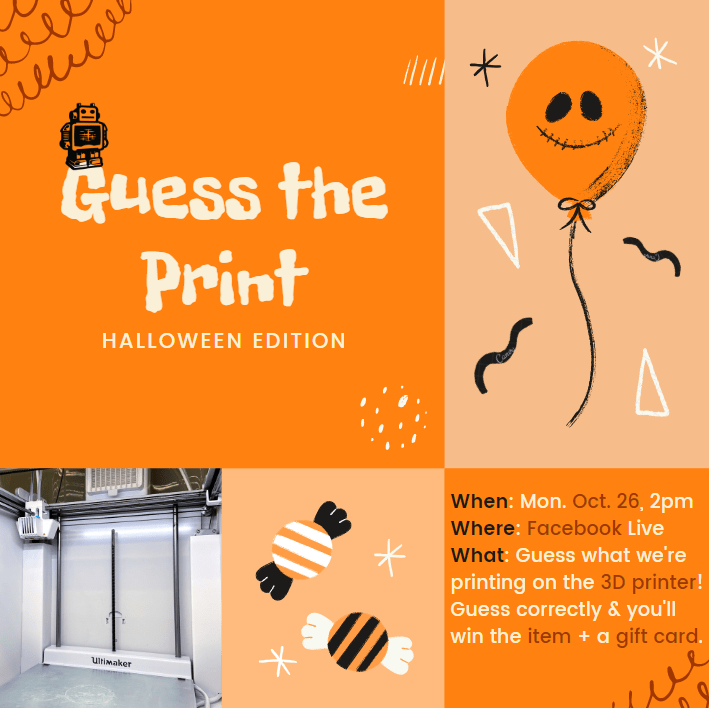
On September 19, from 6:00pm – 8:00pm, we will be watching the pilot episode of “A Korean Odyssey,” also known as “Hwayugi.” Written by the Hong Sisters, a famous screenwriting duo known for such romantic comedies as “You’re Beautiful” and “Master’s Sun,” “A Korean Odyssey” is a modern take on the Chinese classic “Journey to the West.” Son Oh-Gong is a powerful immortal in conflict with Ma-wang, the Bull Demon King. Banished to and trapped in the human world, he is set free by a child, Seon-mi, who can see ghosts, in exchange for protecting her. Years later, they meet again, and personalities and intentions clash.
Ages 16+
Registration is required to receive the Zoom link and viewing instructions. Register on the event calendar here.
For questions, please email us at: ccljtc@ccls.org.
Need a new hobby to keep your spirits up while we’re all social distancing? Been watching K-Dramas for years and want to meet new K-Drama lovers? Love BTS but don’t know much about Korean television? Break out the kimchi and join us to watch an episode of one the hottest Korean shows, then pop onto a Zoom call to chat about the show, the newest Korean music, and Korean culture – all from the comfort of our own homes.
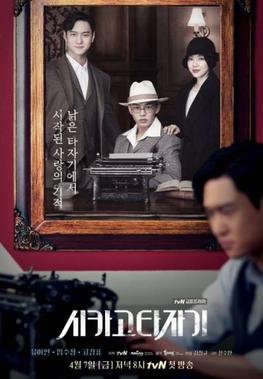
On August 29, from 6:00pm – 8:00pm, we will be watching the pilot episode of “Chicago Typewriter.” Three resistance fighters from the 1930s Japanese occupation of Korea are reincarnated in the present as a best-selling writer, a fan, and a ghostwriter. This drama follows their stories as strange connections between the time periods are revealed, and the characters have the chance to redeem themselves in the modern world.
Ages 16+
Registration is required to receive the Zoom link and viewing instructions. Register on the event calendar here.
For questions, please email us at: ccljtc@ccls.org.
So if any of you are like me, staring at a computer screen all day is both enlightening and exhausting. While I love technology and the various opportunities it affords for learning, exploration, and entertainment, the blue light of the screen can do a number on my eyes and my head, often causing some major headaches. This is why I have a whole bookshelf full of journals filled with handwritten stories dating all the way back to when I was in middle school. Plus, there’s just something so satisfying about sprawling out on my bed, penning out scenes and character arcs and story ideas, and seeing my notebooks slowly fill up with my fictional worlds.
But story journaling doesn’t necessarily have to be fictional. There are two types of story journaling. First is fictional story journaling, where you use your journal as a space to plot out your fictional narratives, sketch out brain maps, scribble down quick thoughts and ideas, write out scenes and dialogue. It’s an excellent way to get your thoughts on paper right in front of you, no matter how messy or disjointed your writing might be. My favorite way to do this is to use pen – no erasing! The most important part of the exercise is just to write something. You can always edit later. (Don’t have any story ideas right now? Check out some of the links below for some inspiration!)
The other type of story journaling is life story journaling. It’s very similar to regular journaling, where you write out your thoughts and feelings and events of the day, but with a key difference: the perspective. When you sit down to write in your life story journal, you do so with the mindset of an author writing a story; but in this case, that story is about you. Take a look at your day, and then think about how that day contributes to the story of your life as a whole. Where are you in your dramatic structure diagram? Are you in the rising action section, working towards a particular aspiration or mission? Maybe you’re relaxing in the resolution section, after you’ve completed a major goal and enjoyed or suffered the consequences of it, and you’re preparing to begin the next stage in your life. Wherever you are, this method of writing allows you to see yourself almost from the outside, to understand what has shaped you as a character in your own story and determine what will motivate you into a better future.
Have you ever woken up from an intense dream that felt so real that you were unsure if it actually happened or not at first? Or, maybe a specific person was in your dreams, and now they keep popping into your mind? Dreams are mysterious and sometimes intense, leaving lasting impressions on us. I find myself constantly having dreams that feel so real and powerful, yet I end up forgetting them almost completely not even 20 minutes later. I decided to start dream journaling to keep track of hidden meanings in my dreams and also to learn more about myself.
A dream journal is a reflective way to keep track of your dreams. I keep my dream journal next to my bed so whenever I wake up from a dream-filled sleep, I can write it down on paper quickly before I start forgetting. Many believe that dreams are a manifestation of emotions that we carry with us throughout the day. If something is bothering you, even if it is pushed deep down into your subconscious, it can use dreams as a source of release. There are a lot of common dreams, like having your teeth fall out, feeling like you’re being chased, or moving in slow motion that can have deeper meanings attached to them. Things like stress, impatience, anxiety, conflict, or avoidance can be represented in the former dreams, and by documenting your dreams, you can reflect on things that may be bothering you in your real life. Dream journals can also help you if you are trying to learn how to lucid dream. Lucid dreaming occurs when a person is aware that they are dreaming and can control what they do and what happens within their dreams. According to Healthline, “When you write down your dreams, you’re forced to remember what happens during each dream. It’s said to help you recognize dreamsigns and enhance awareness of your dreams.” If you are interested in learning more about dream journaling, check out the resources below.
The hardest part about starting a journal is staring at a blank page and wondering how to fill it, so we’re here to help give you a little inspiration! Last week, we talked about art journaling, so this week we bring to you an idea for a type of art journaling that many people follow: music journaling.
Music journaling is one of the easiest types of art journaling because there is so much visual content available out there for music lovers, from logos to album covers to merch to photographs to sheet music. Think about what kind of music you like. With classical music, there is tons of free sheet music that you could cut up and collage. Or you could draw or paint creative representations of classical instruments. With classic rock, there are album covers and funky fonts and splashes of dark or neon colors.
The big name in music journaling right now is K-Pop journaling. K-Pop, or Korean Pop music, is music from South Korea that is currently sweeping across the United States, integrating itself into various aspects of online fandom culture as well as the more traditional media sources like television and radio, spearheaded in part by the massively popular group, BTS. And fans of all ages have taken to expressing their love for this genre of music in many different ways, one of those ways being K-Pop journaling. I have included a couple links below to videos of diarists creating K-Pop journals, but key features tend to be artist logos, photos of the artists, calligraphy, colorful stickers and decorations, and visual playlists of the artist’s songs as well as written memories from concerts attended.
So if you like art and music of any genre, try giving music journaling a go.
On a different note, if you like BTS, K-Pop, Korean Dramas, Korean culture, or any or all of the above, check out our new KClub! We meet on Saturdays about once a month or so for two hours where we stream an episode of a K-Drama and then discuss and chat.
Need a new hobby to keep your spirits up while we’re all social distancing? Been watching K-Dramas for years and want to meet new K-Drama lovers? Love BTS but don’t know much about Korean television? Break out the kimchi and join us to watch an episode of one the hottest Korean shows, then pop onto a Zoom call to chat about the show, the newest Korean music, and Korean culture – all from the comfort of our own homes.
On July 25, from 6:00pm – 8:00pm, we will be watching the pilot episode of “Live Up To Your Name”. Part modern part historical drama, this show flips the typical K-Drama time travel trope on its head. Heo Im, a practitioner of traditional medicine from the Joseon period, falls into a river and comes up in modern day Seoul where he meets Choi Yeon-kyung, a cardiothoracic surgeon who only believes in modern medicine.
Ages 16+
Registration is required to receive the Zoom link and viewing instructions. Register on the event calendar here.
For questions, please email us at: ccljtc@ccls.org.
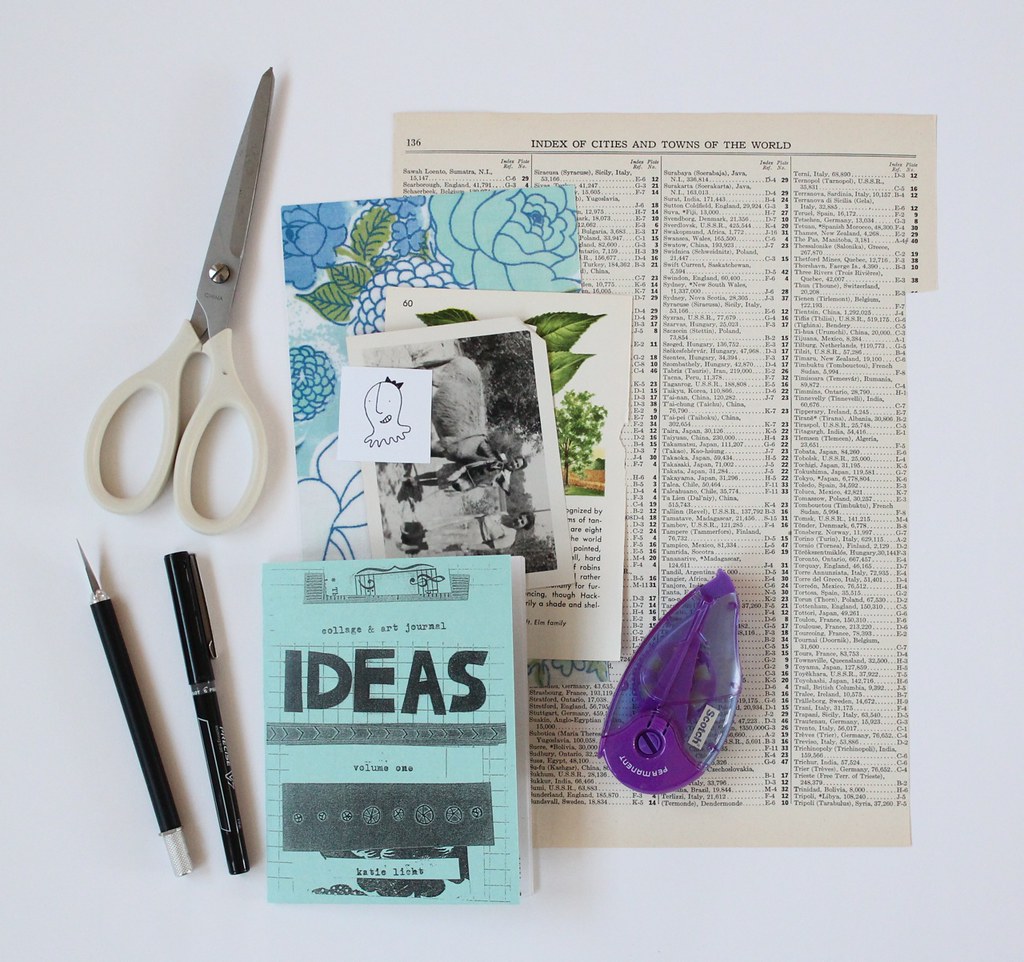
Is writing just not for you, or is the thought of filling a page with just words and calendar spreads too daunting? Try keeping an art journal instead.
An art journal is similar to a sketchbook, but different in its approach. With an art journal, you want it to be a visual diary, a reflection of your life, your dreams, your feelings, your fears. For example, you could include visuals of your hobbies or passions. If you like gardening or plants, you can draw little representations of your plants, give them names, decorate with stickers. Or maybe you had a really bad day, and you just want to splatter a couple of pages with some dark colors. Whatever works for you, whatever allows you to unload, to relax, to express yourself, to reflect on your feelings or your life, is perfect for an art journal.
Another key difference between a sketchbook and an art journal is that you don’t have to be particularly artistically talented to keep an art journal. While having a sketchbook means that you have to, well, sketch, an art journal can be anything you want it to be. You can fill it with photos, polaroids, printed pictures, colorful washi tapes, aesthetic quotes, drawings and paintings and watercolors and sketches and scribbles – whatever suits your artistic fancy. If you can’t draw, fill it with photos. Print out titles in pretty fonts. Line the borders of your pages with washi tape and stickers. It’s up to you. The journal is your canvas.At the end, you will have a visual record of your life. But it also doesn’t need to be only visual. If an entirely visual journal is just as daunting as an entirely written journal, combine them. Write out something in the center and then draw or decorate in the margins. Or draw and decorate the middle and then write in the margins. Or mix it up throughout the entire page, turn the page on its side, write and draw on alternate pages, write something within your artwork.
Just have fun with it. Surprise yourself, and see what you can create.
Thinking of ways to become more in touch with yourself during this quarantine? Sometimes it can be easy to get lost in the monotony of the “new normal” in quarantine, so some helpful and healthy mindfulness prompts can help bring to mind what made each day special. Mindfulness is about connecting the mind, soul, and body, so that you can be in the moment, rather than letting your thoughts drift off into anxious, dark places. By focusing on the present and bringing gratitude and gratefulness into each day, mindfulness can be extremely therapeutic.
There are tons of mindfulness prompts that can be used while journaling that can help your juices start to flow. Many of these prompts ask questions like “What things am I most grateful for in my life,” “How am I impacting other people around me daily,” “Some areas that I’d like to improve in my life are…”. Clearly, a lot of these prompts dig into some areas that may not feel super comfortable, but by addressing them and putting them out on paper, they bring a sense of awareness and understanding. The thing that I like the most about mindfulness journaling is that it grounds me and helps me to understand myself better. If I am in a bad mood, sometimes mindfulness journaling can help me realize why I am feeling cranky, and it gives me the tools I need to improve my mood.
If you are interested in diving deeper into the world of mindfulness journaling, there are many resources available online. My favorite mindfulness writer is Katie Dalebout, and I learn a lot about being mindful, grateful, and present through her podcast “Let it Out.” There are many mindfulness prompts available online as well, which can greatly help with starting the process.